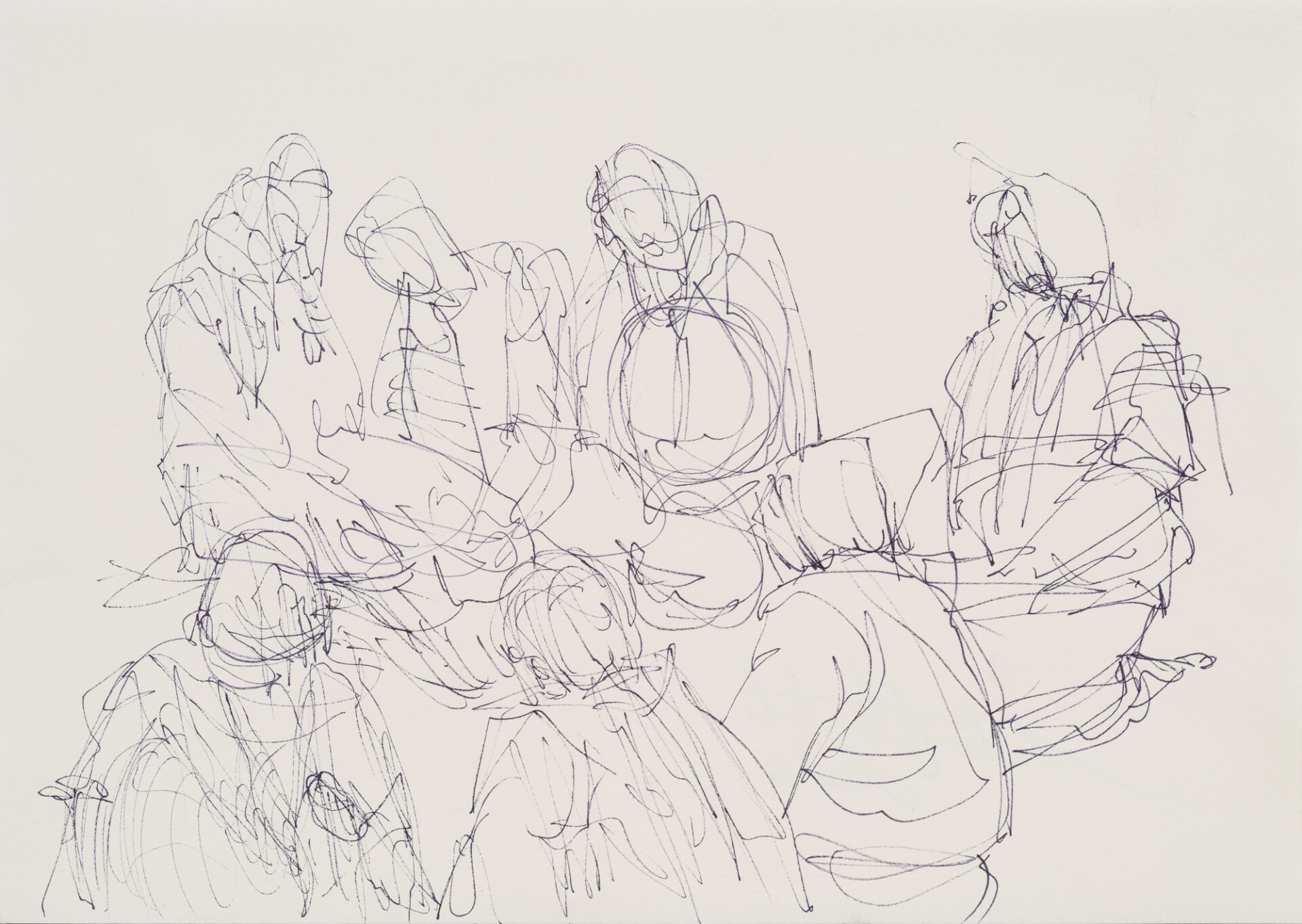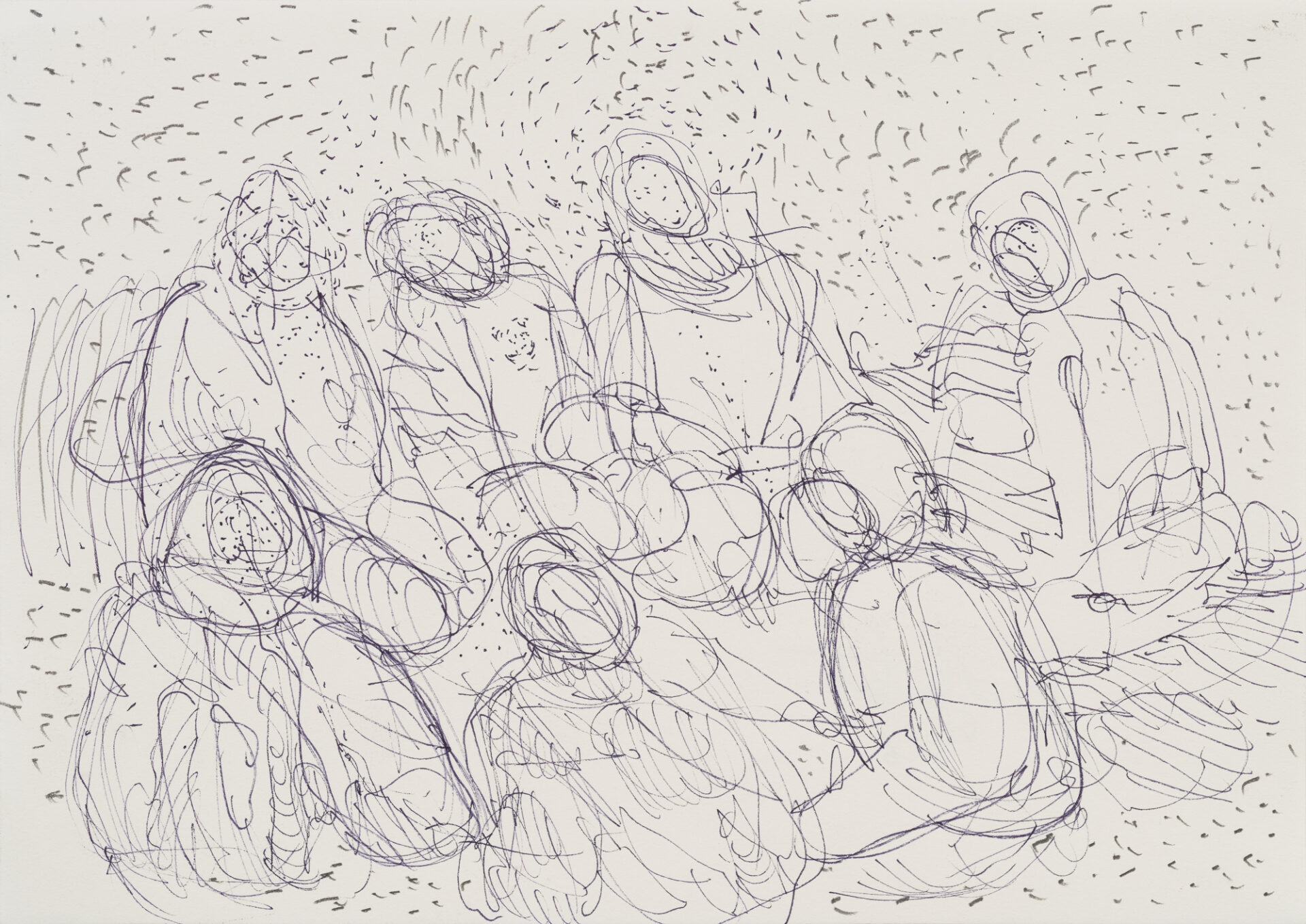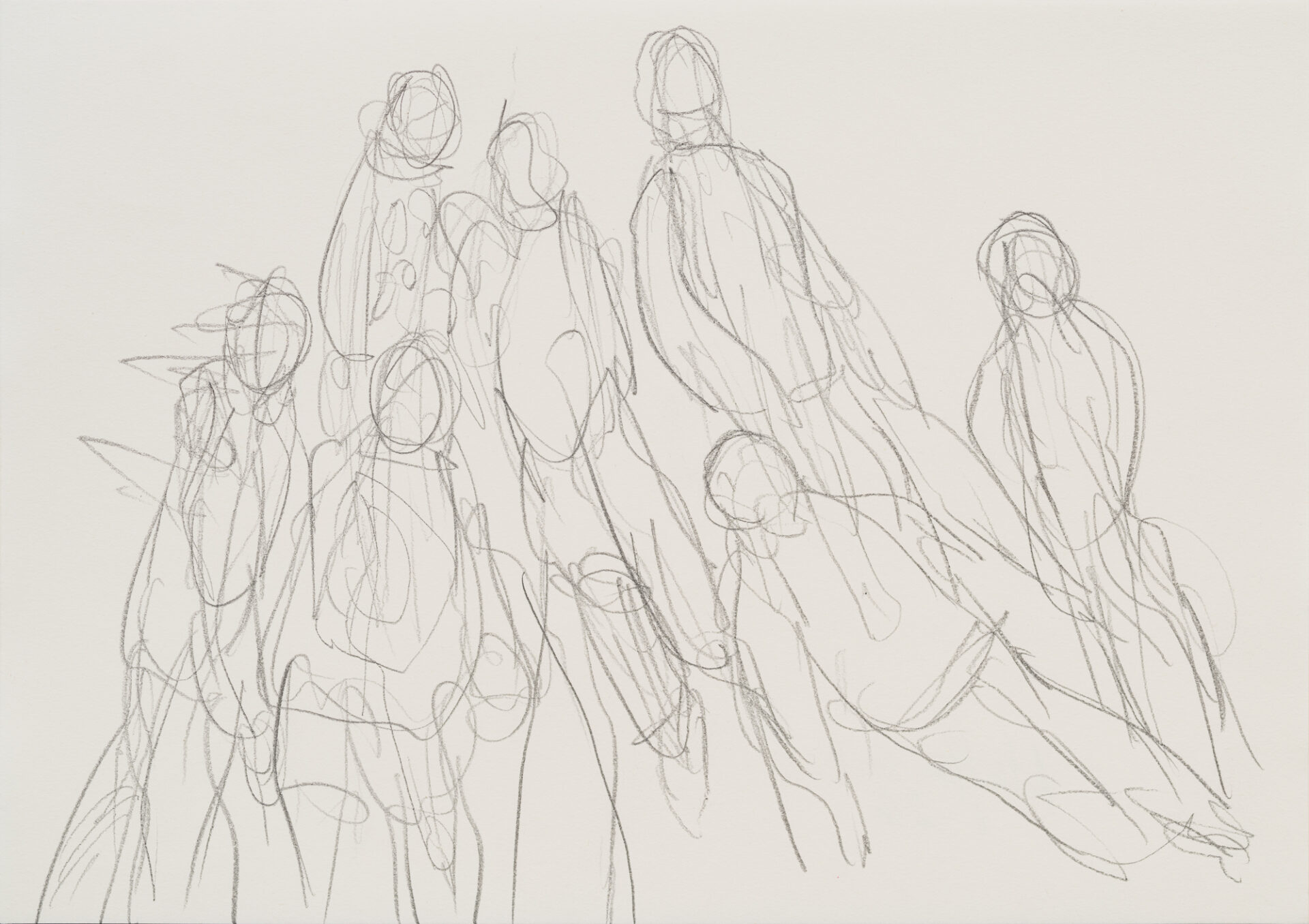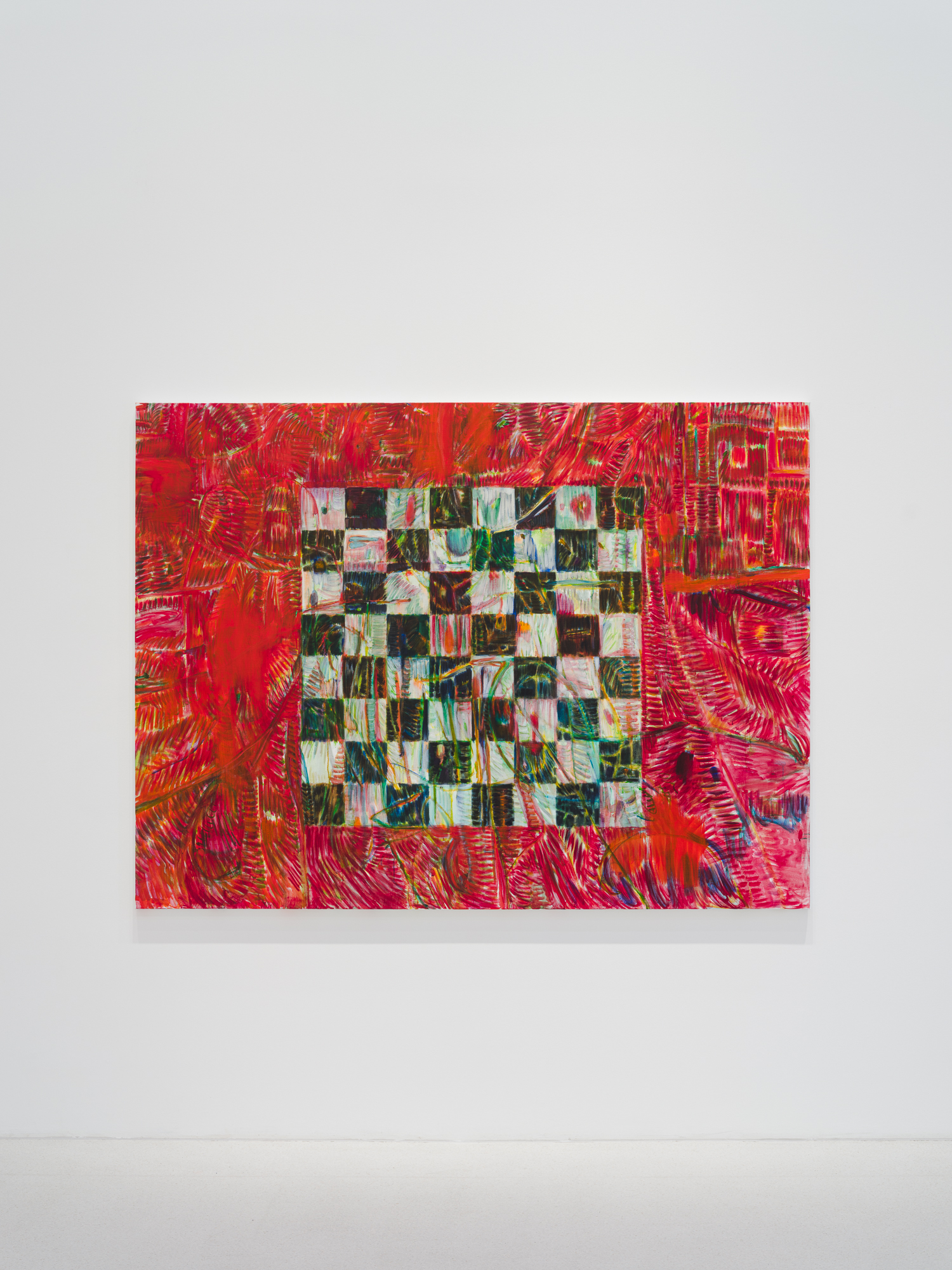
1999, the day of the great eclipse. The neighborhood’s residents had gathered. A motley crowd. Each one held in hand a fragment of cut medical X-ray film, scrutinizing the celestial phenomenon through it. The painter, for his part, watched the watchers. Suddenly the eclipse’s light revealed the fragmentary images held within the radiographs. “I have no memory of the sun, only of what appeared to me then: opaque bodies gazing at the sun through images of transparent bodies.”
What becomes of a living, branching thought when it sheds its words to advance, under cover, into the field of colors and forms? The philosophical or metaphysical treatise undergoes its metamorphosis and becomes a talisman, the other name for a painting when it retraces the soul’s initiatory path. There, thought crystallizes into cryptograms.
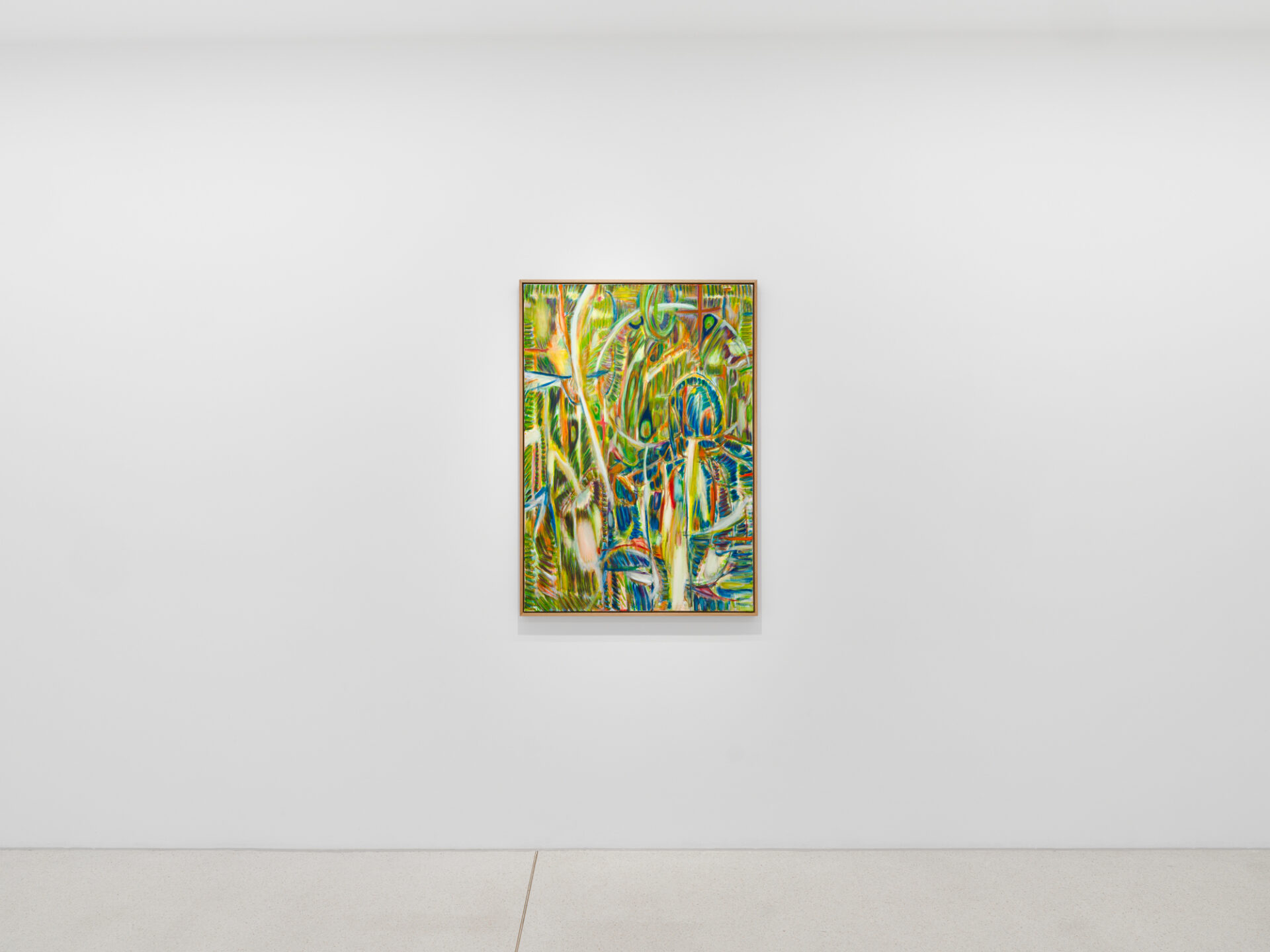
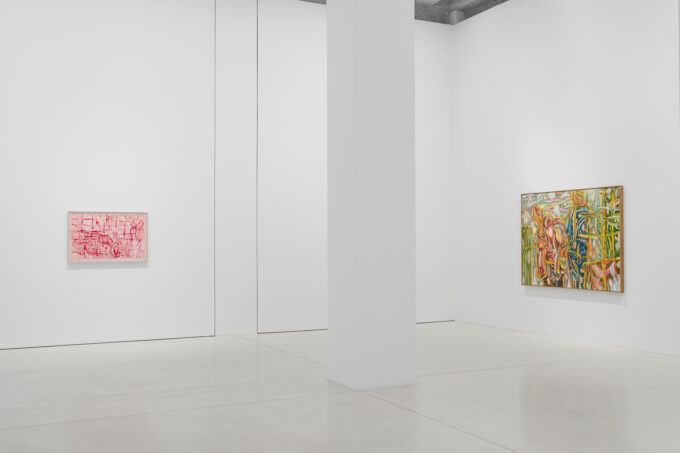
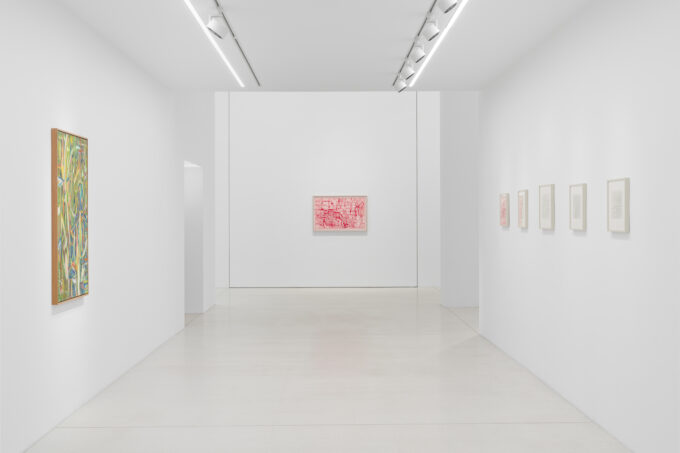
Line and touch unfold simultaneously from a double anchorage: the motif perceived by the eye, and the invisible flash of the idea. To paint, then, becomes a reflexive act: the painter’s gesture retraces the archaeology of the visible world, registering the emergence and the manifestations of the forces that constitute material reality, even as it expresses the meaning of that very operation. This is precisely what Achraf Touloub’s painting embodies.
The strength and the relevance of his work lie not in expressing a thought or an idea, which would confine it to mere illustration, but in constructing it, in folding it into the very substance of the work.
If Achraf Touloub’s painting gives body to thought, it likewise strips bodies and objects of their materiality. The artist paints transparent territories, traversed by the gaze. He paints flows of capital, of information, of populations, the wholesale colonization of real and virtual territories alike, and of our consciousness itself. And at the heart of these vast, global questions, one senses more intimate subjects stirring behind the anonymity of figures and places.
To write is not to describe, and to paint is not to depict, as Georges Braque so brilliantly put it, a remark that illuminates the particular quality of this work, which manages to fuse sensory observation with mental projection.
This singular approach finds its echo in mystical disciplines where ecstatic dance and prayer merge, where the practice of drawing meets meditation, uniting the workings of mind and body, plunging toward their dark, inviolate source, while at the same time projecting us into the dazzling, inexhaustible variety of their manifestations.
The painter traces the course of things back to that originary point where matter and consciousness are sown together. It is a celebration of fertility in the fullest sense of the word, at once physiological and philosophical.
Flesh, fire, spirit, light: metaphysics unfolds here beneath the veil of pictorial matter, lending this fire-breathing painting, blazing with images, its esoteric character.
The intelligible becomes tangible. Representation rises to the status of subject; it acquires a voice, it teaches.
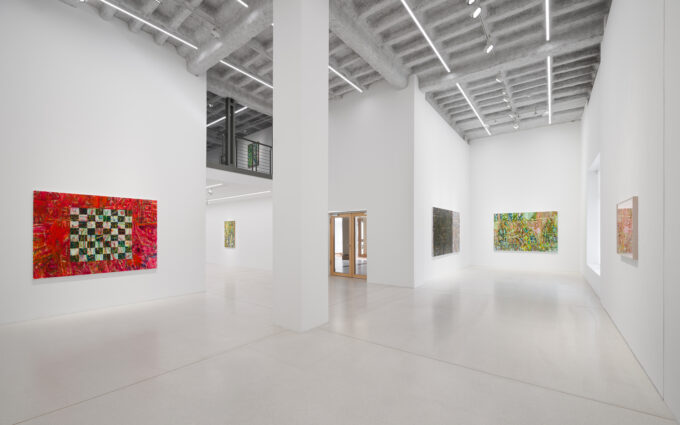
Scene or stage: the protagonists merge with the setting, form with ground, figure with space. Everything is porous, crossed through by currents of living force. We find ourselves at once underwater, on land, in the city, in the forest, in the sky, in the cosmic void; the Pleiades dwell alongside bodies, fullness alongside emptiness, noise alongside silence, sensation alongside idea, the near alongside the far, myth alongside sensation.
This is a seer’s painting, a painting nourished by solitude and concentration, which reveals as much as it conceals.
Opulence of color, refinement of composition: is this decorative, or metaphysical? One need only ask the question before Achraf’s canvases, or before the works of Persian miniaturists, or the architects of Samarkand, to understand that the distinction does not hold.
When a work succeeds, it becomes threshold, door, bridge, or vessel. It looks back at us even as it welcomes and carries us.
Such is the price at which painting rises from form to myth.
David Rosenberg
Paris, June 2026
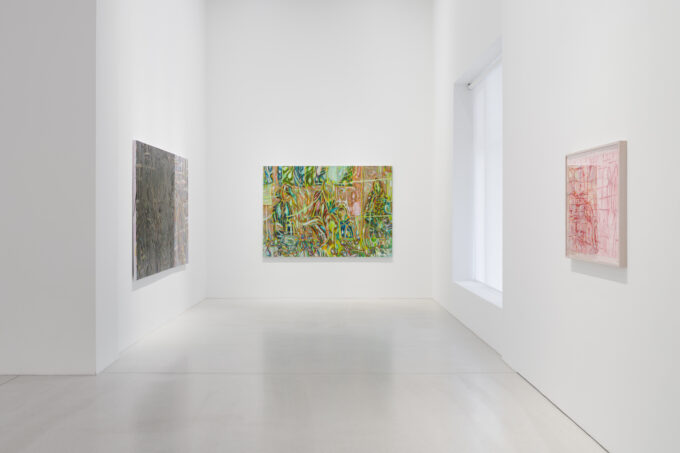
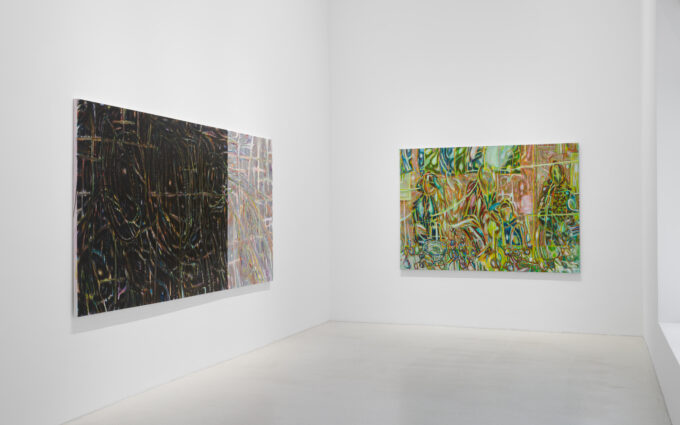
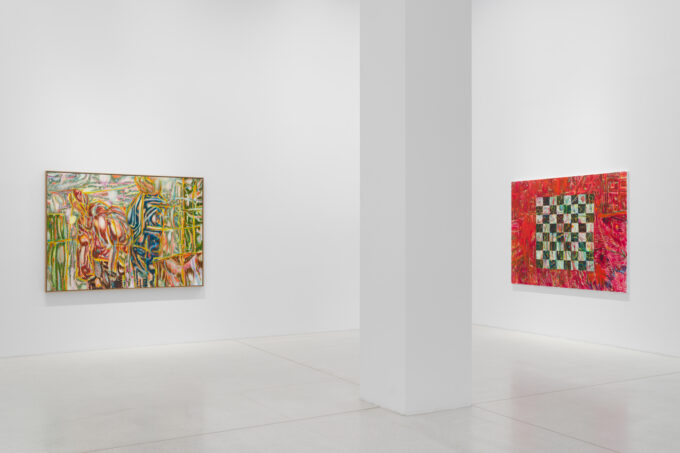
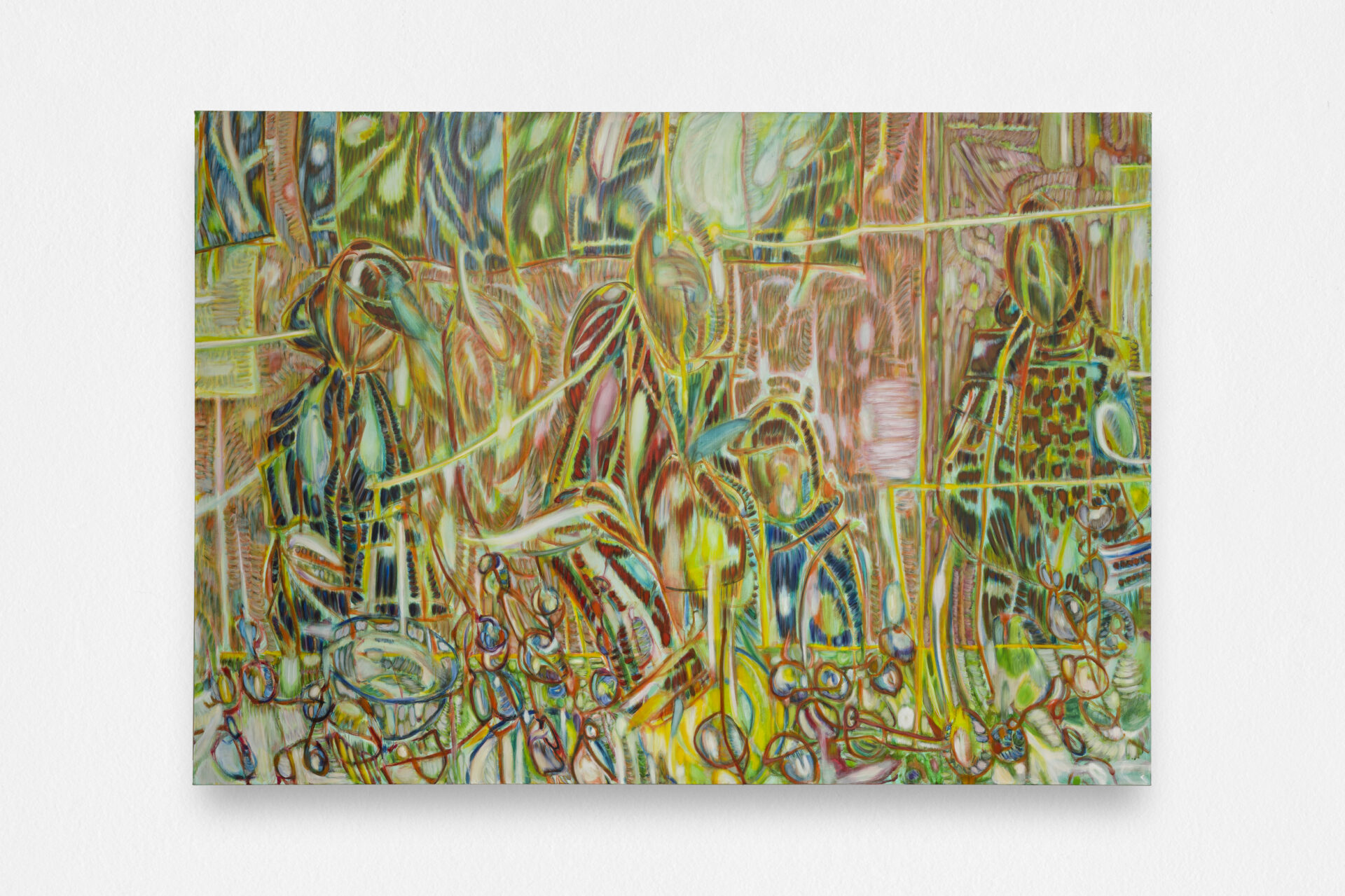
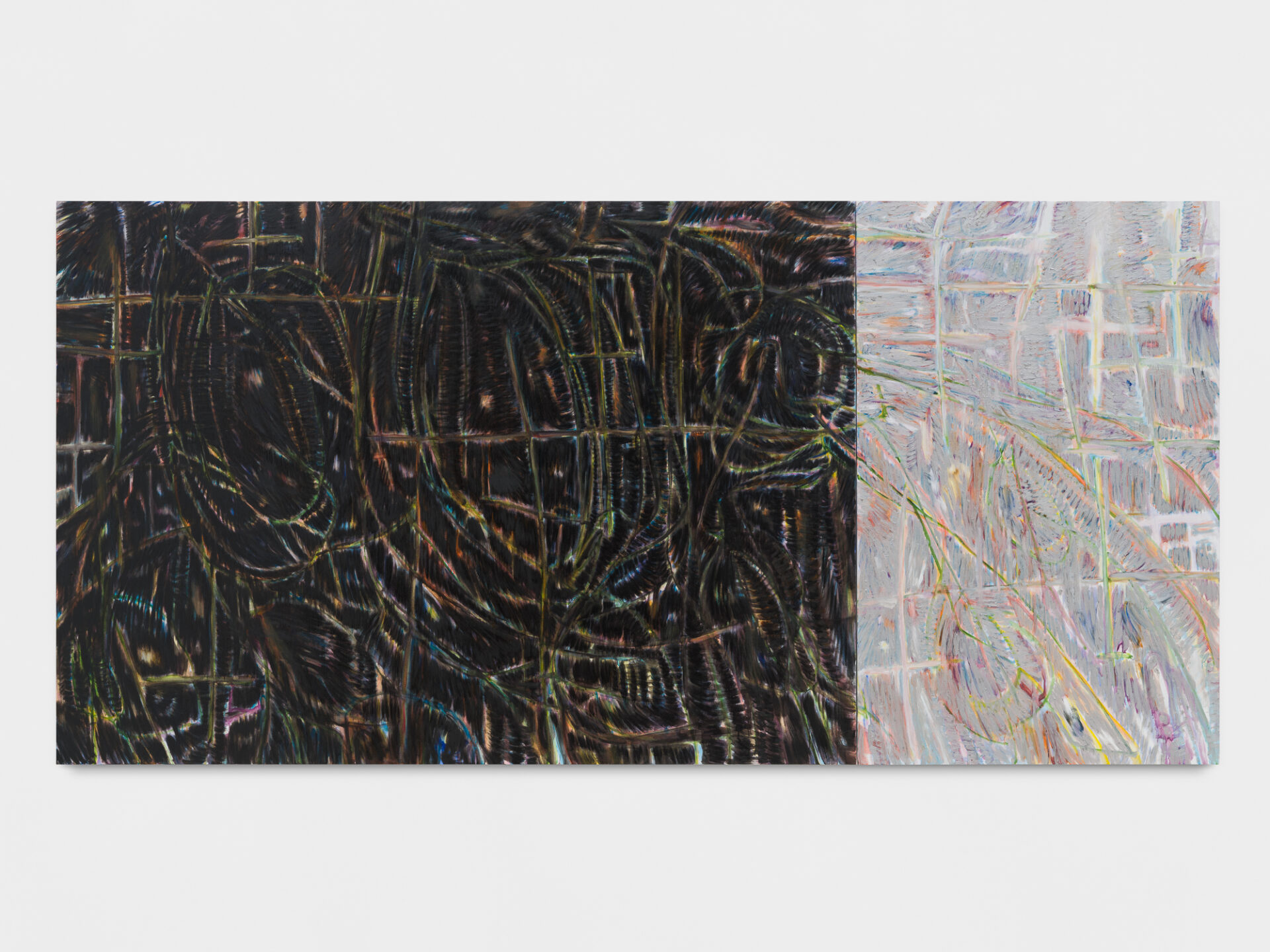
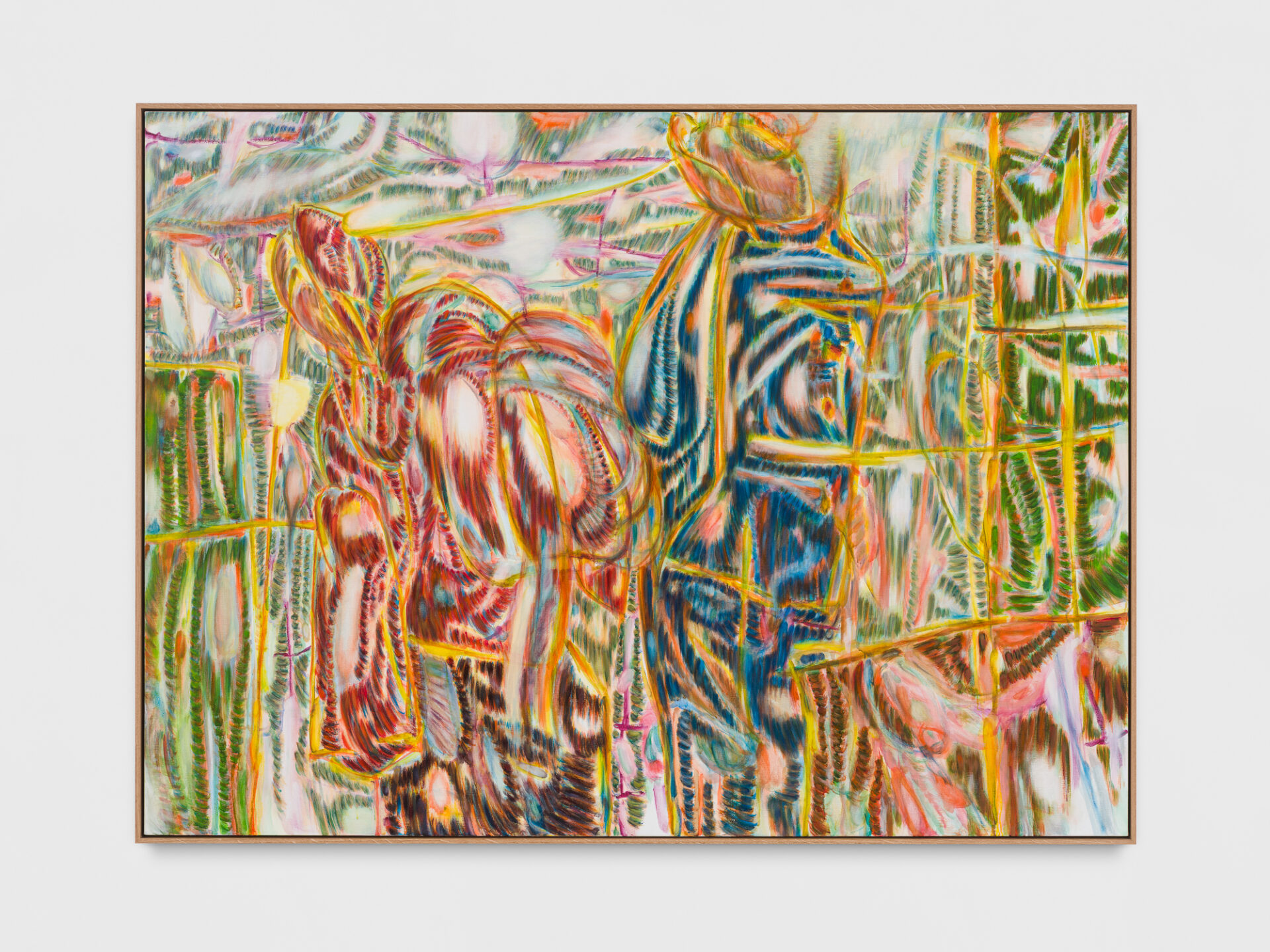
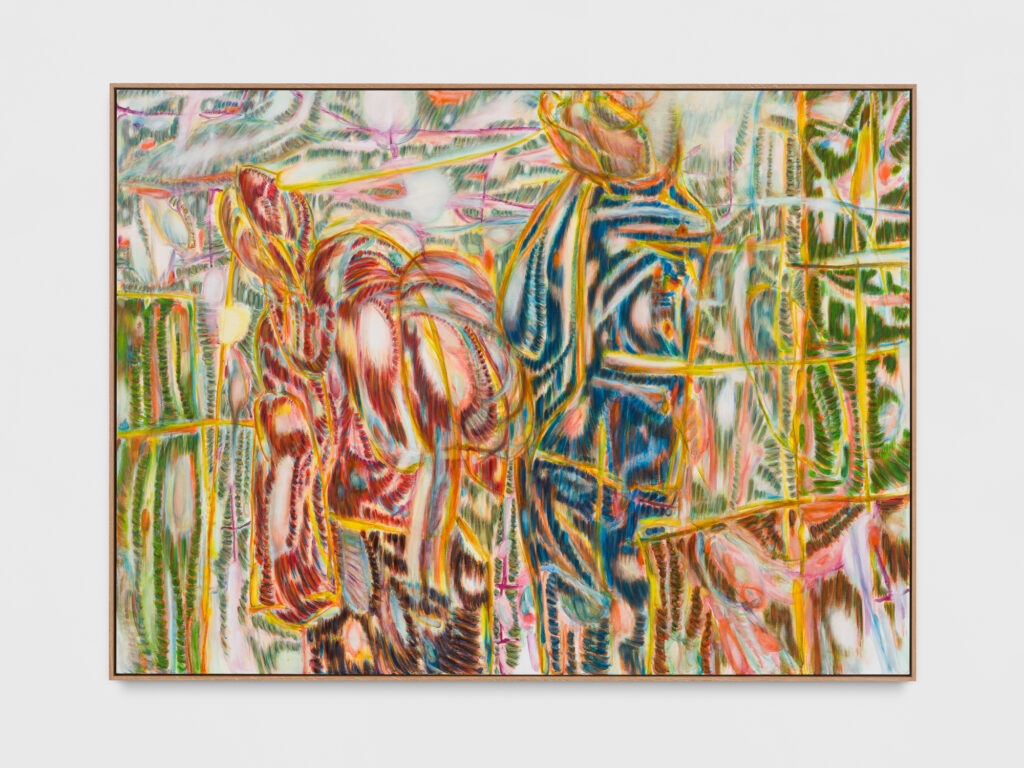
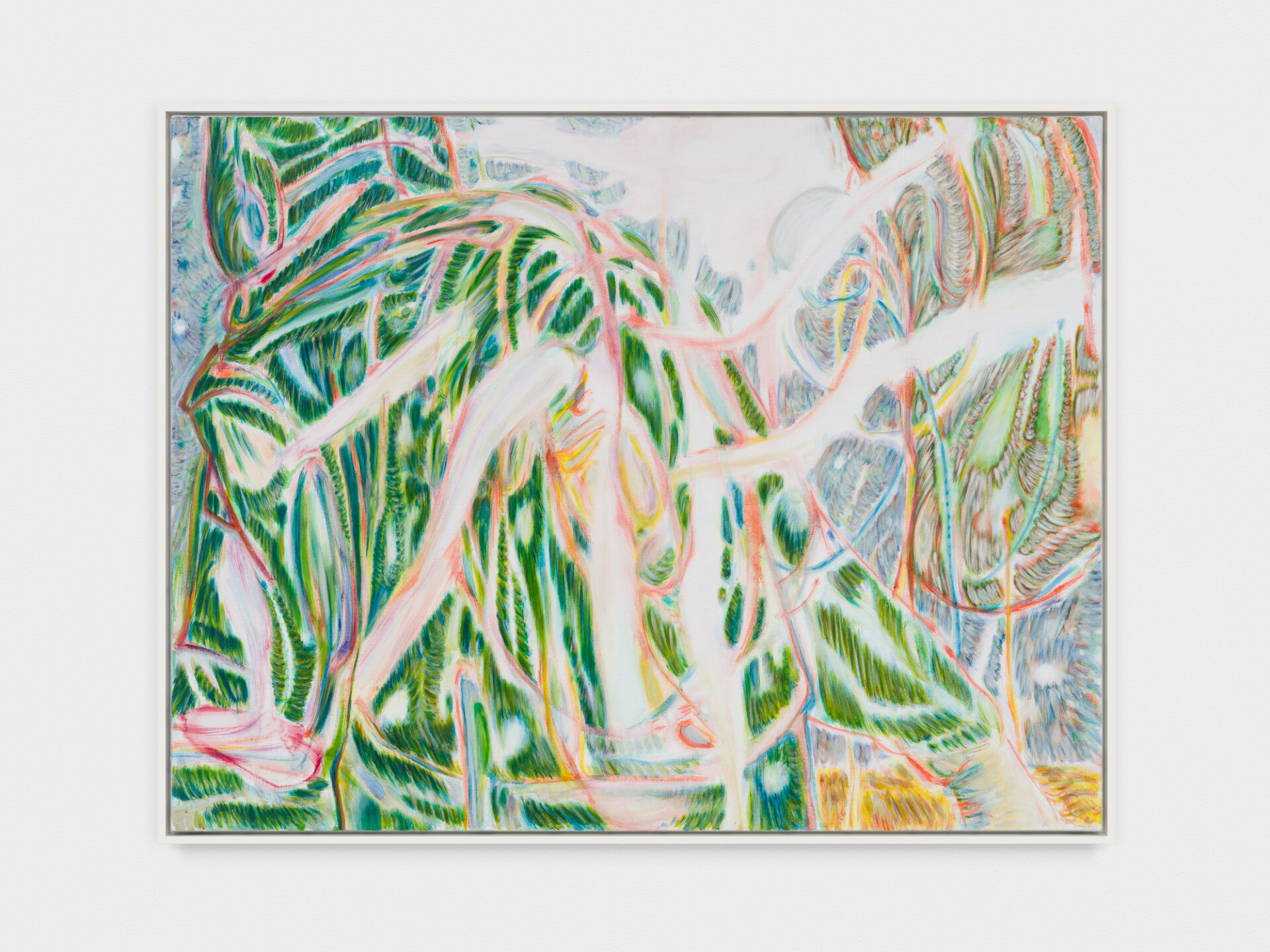
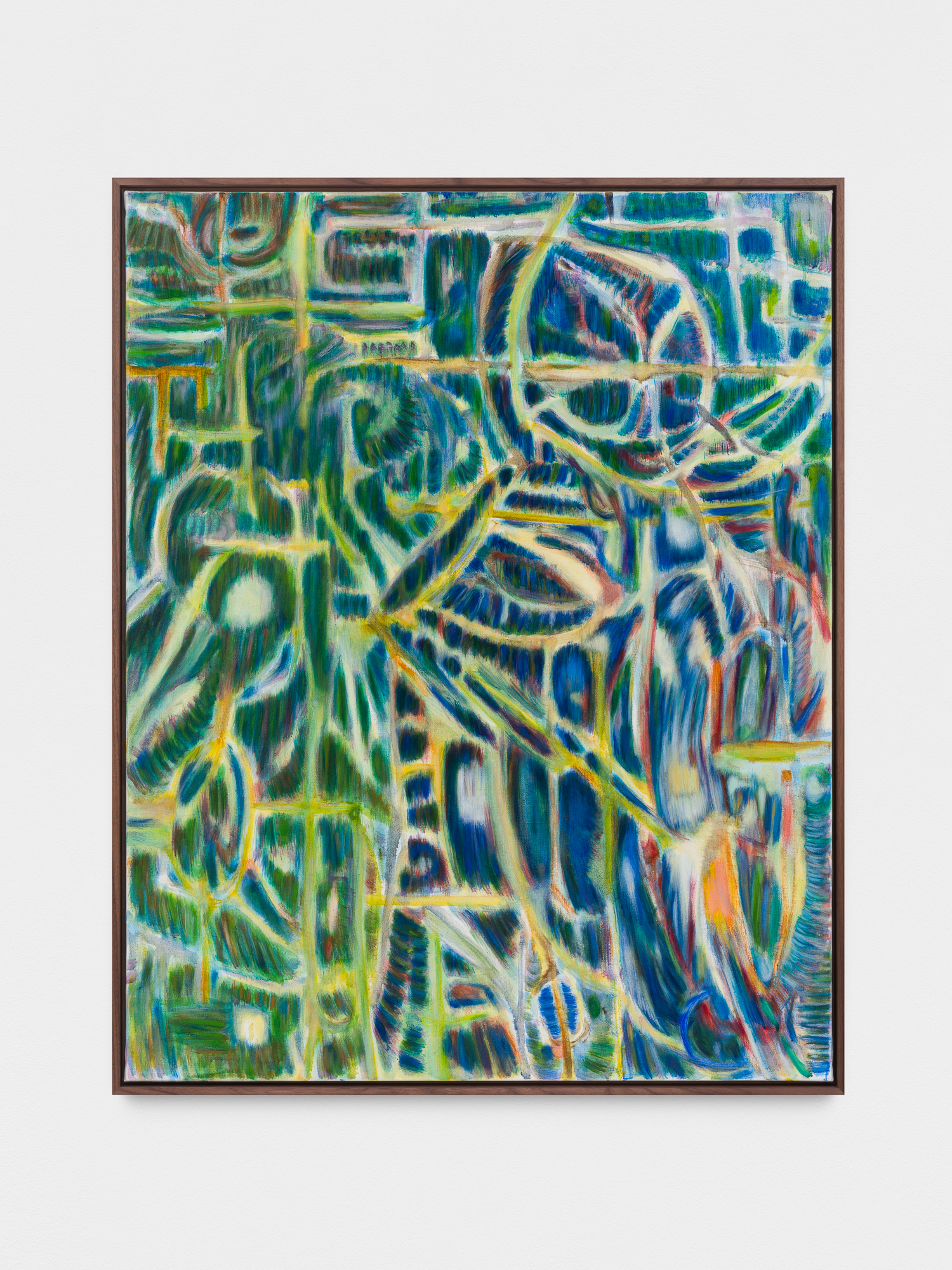
“This painting makes me meditate on systems, and on individuals within systems. I wanted to be able to depict this situation now, because I think it is an important one. And I have arrived at the point where maybe we are not so separate from the systems anymore. Maybe we are becoming the infrastructure of the system, the fluxes passing through our bodies, our eyes, our orifices. This is why you see these figures from behind, with a hole in the back, and why you see them entering into a collision with the background. I was very interested in imagining that we are becoming a kind of circuit, with information just passing through: this experience of interfaces, of information you move through.”
Achraf Touloub
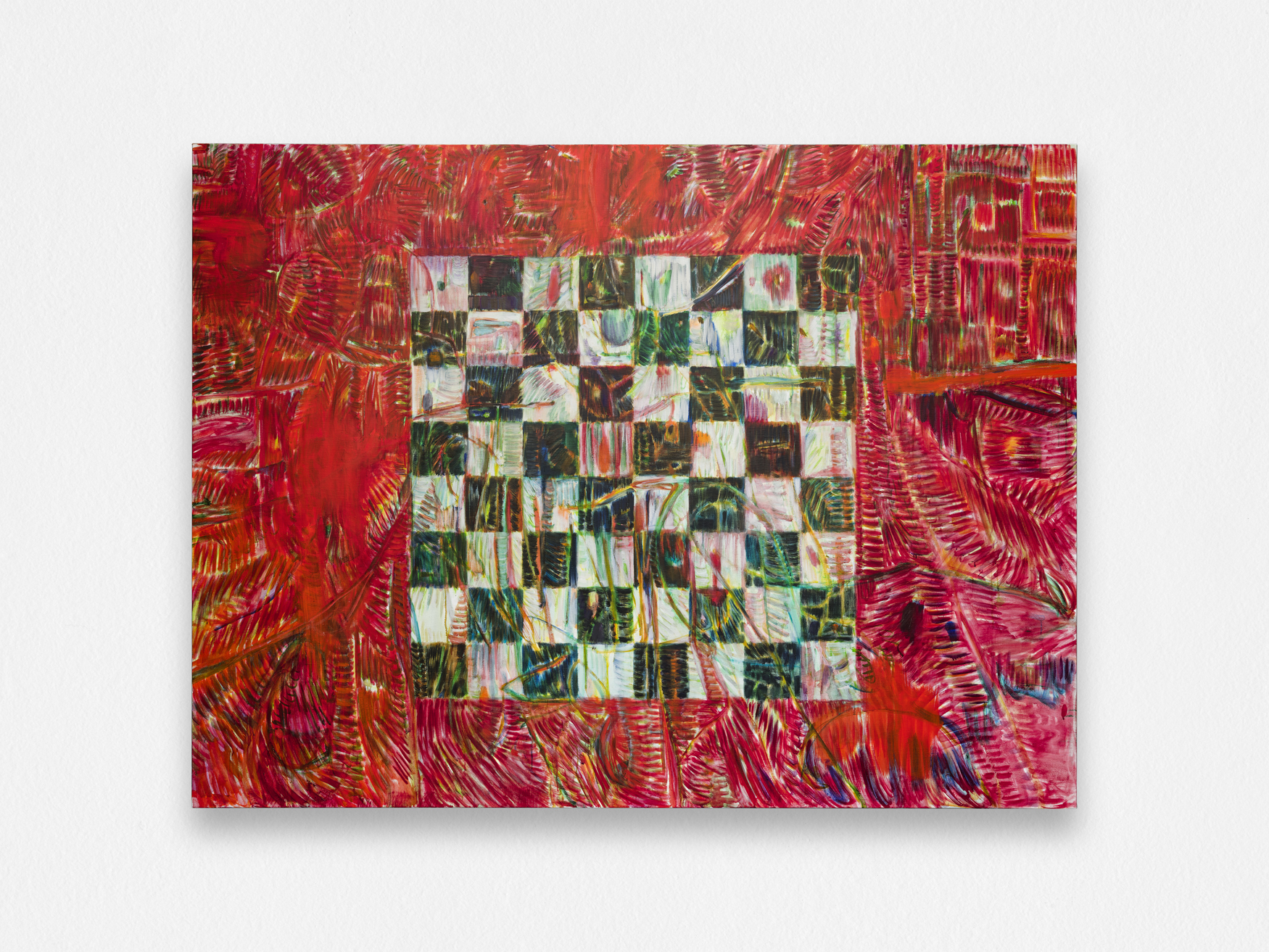
Achraf Touloub
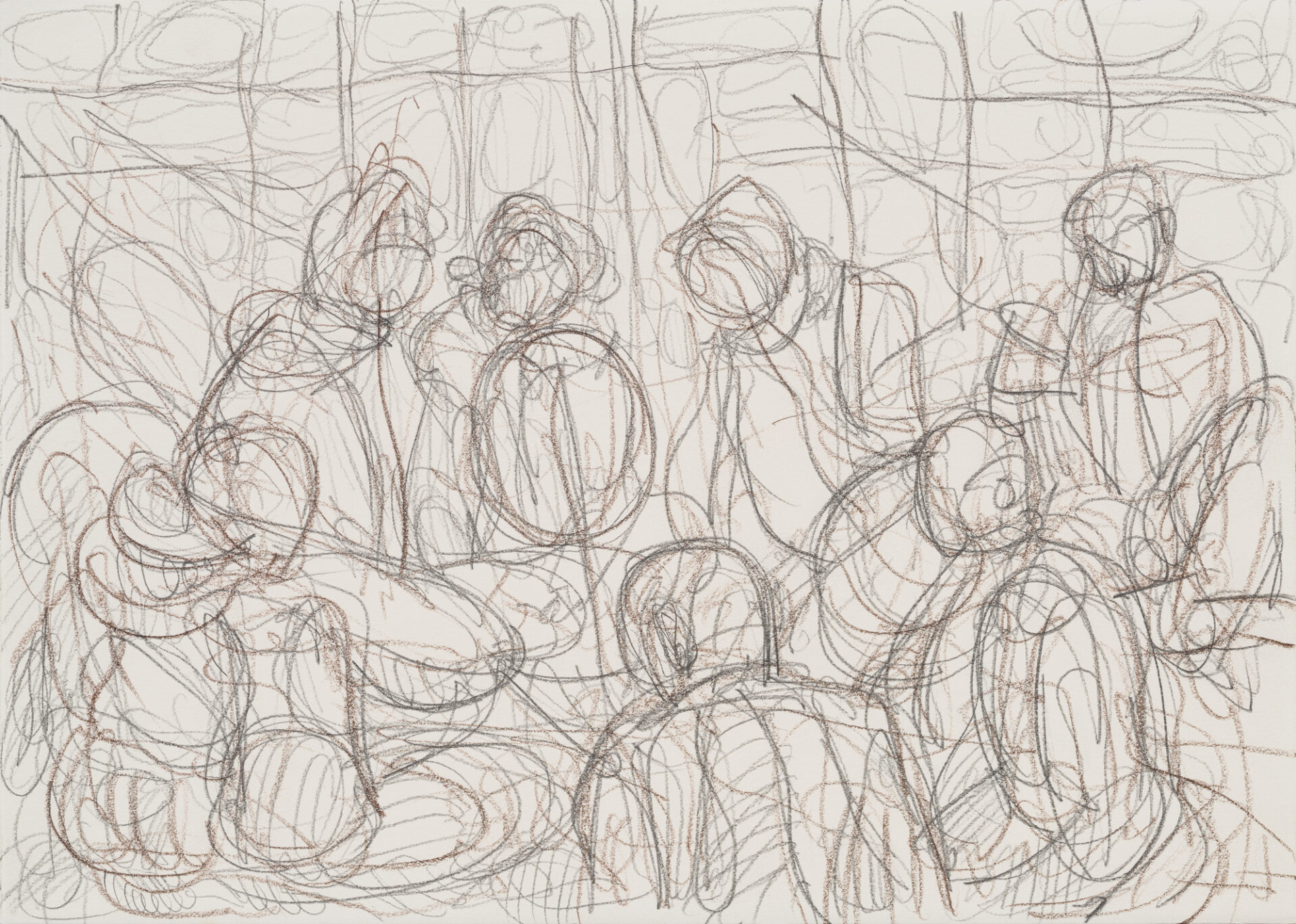
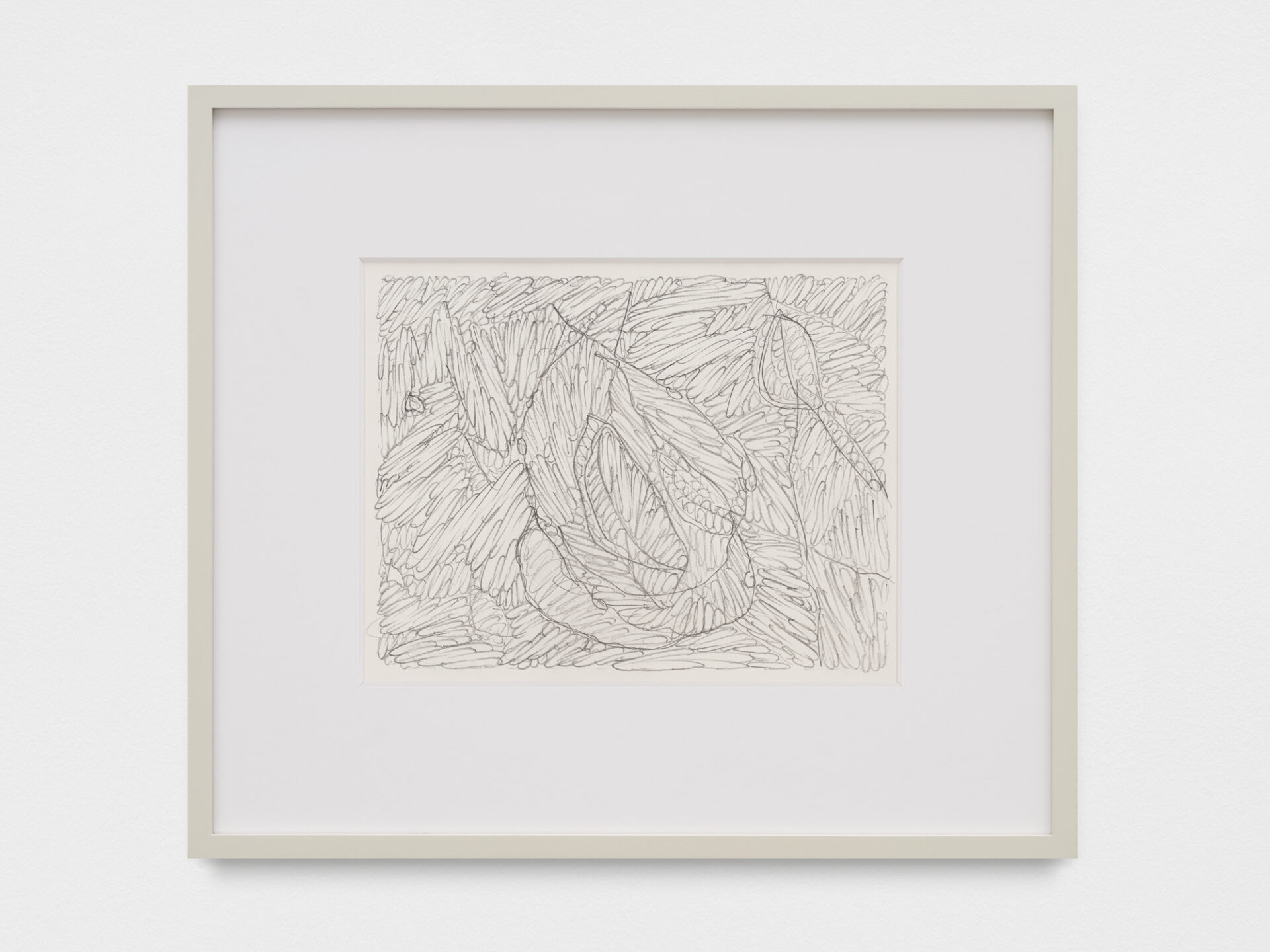
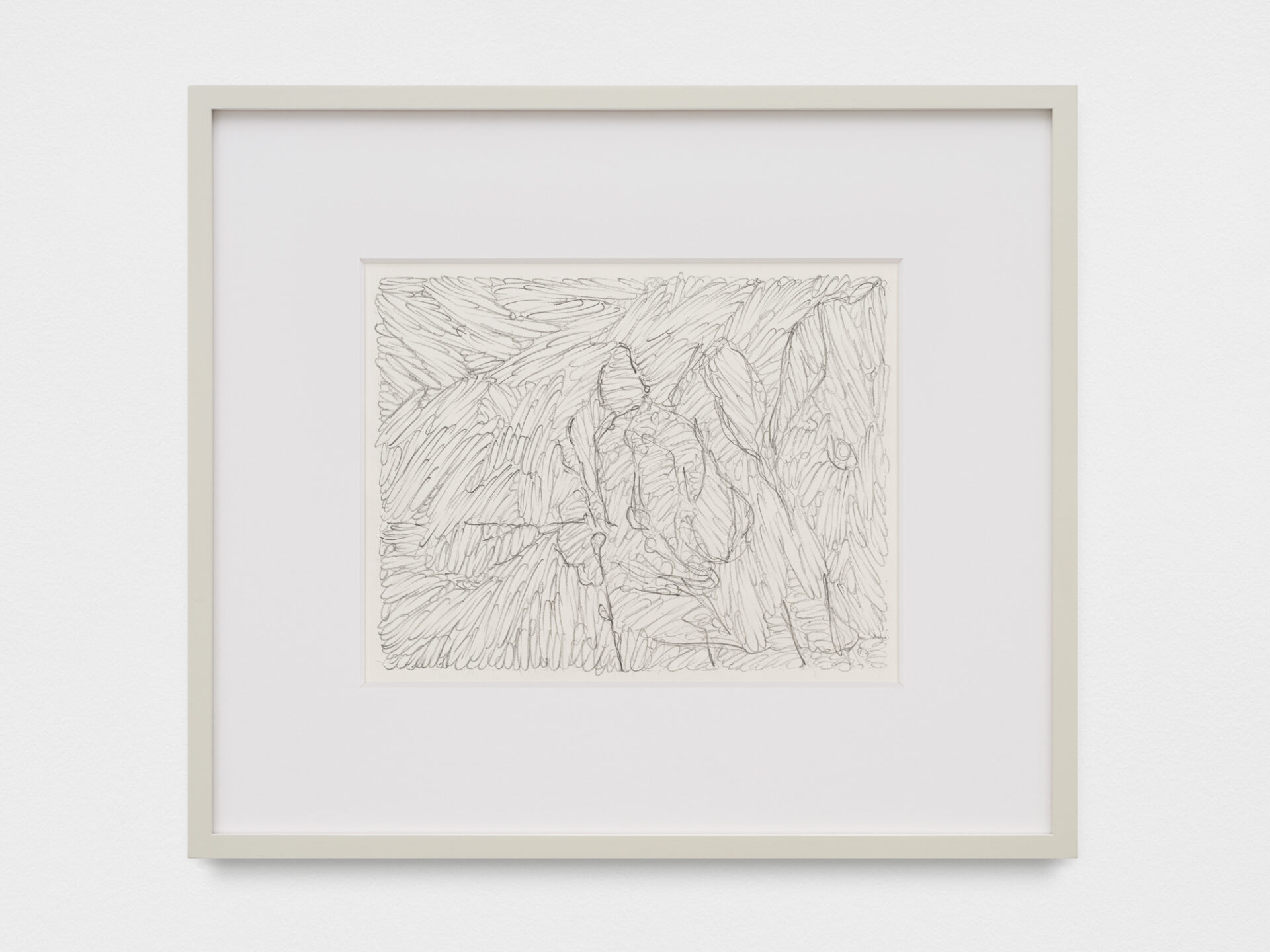
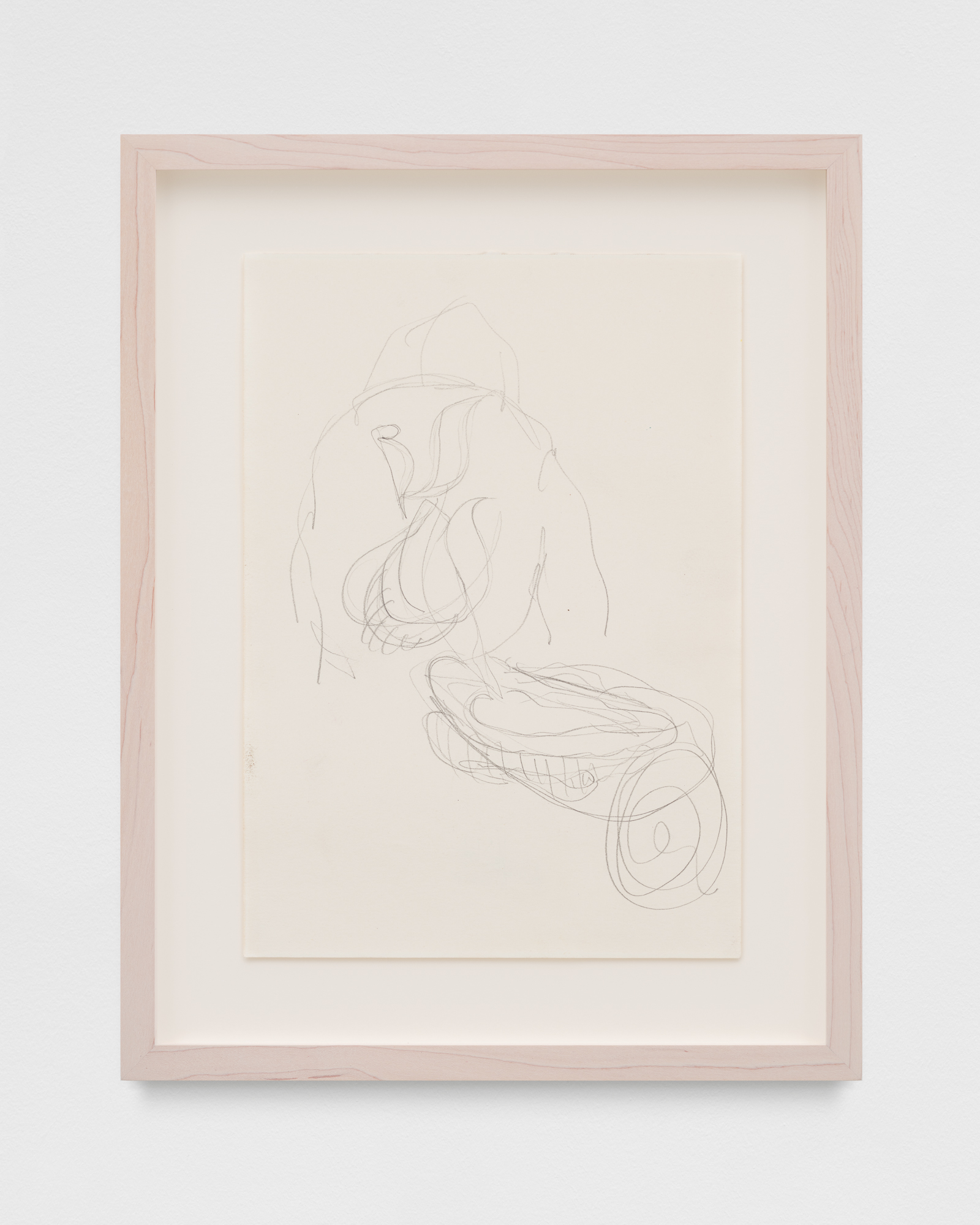
Study for Latent Entities, 2026
pencil on paper
18 x 23 cm; framed: 33.5 x 38.5 x 2.8 cm
Achraf Touloub
Study for Latent Entities, 2026
pencil on paper
18 x 23 cm; framed: 33.5 x 38.5 x 2.8 cm
Achraf Touloub
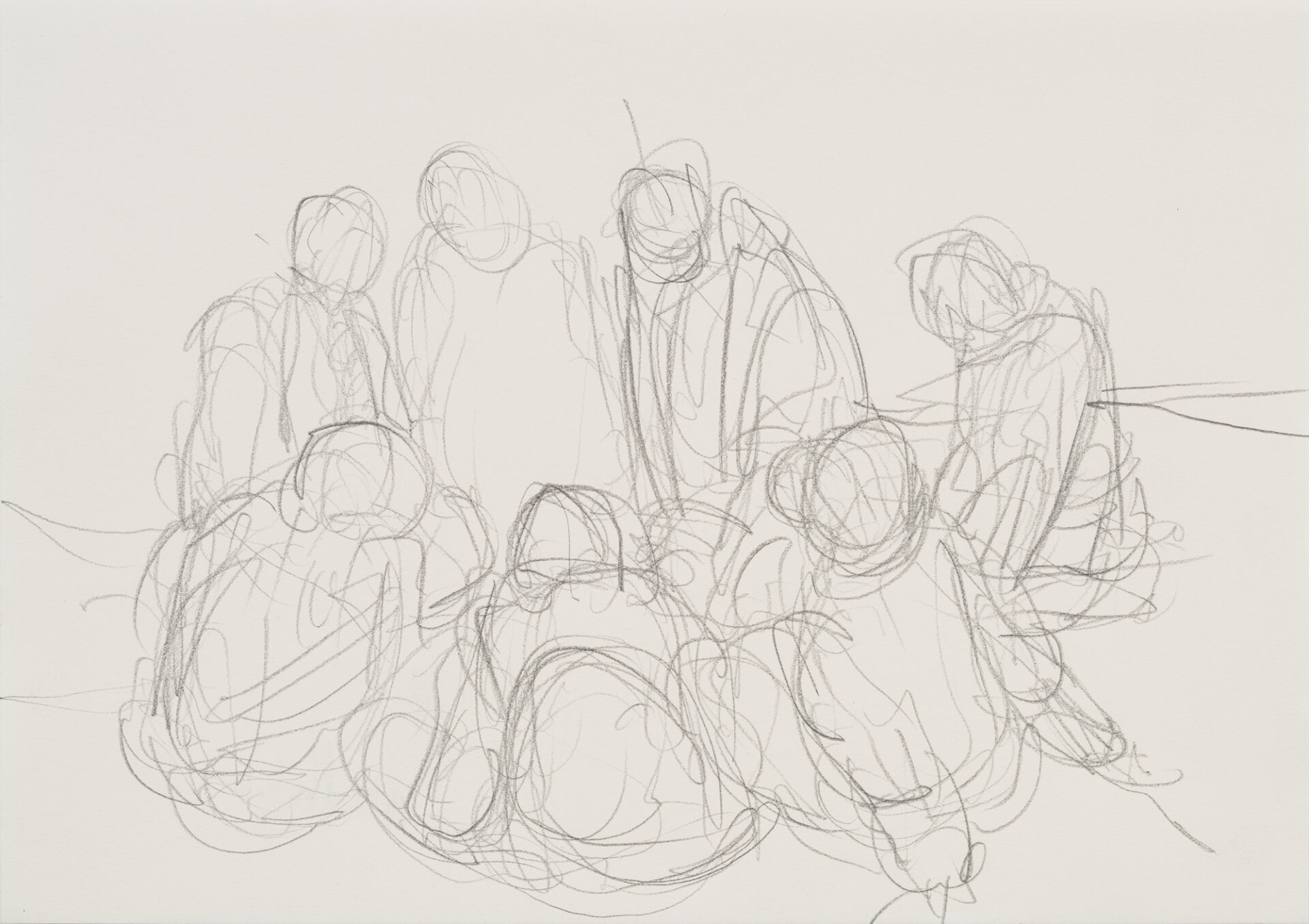
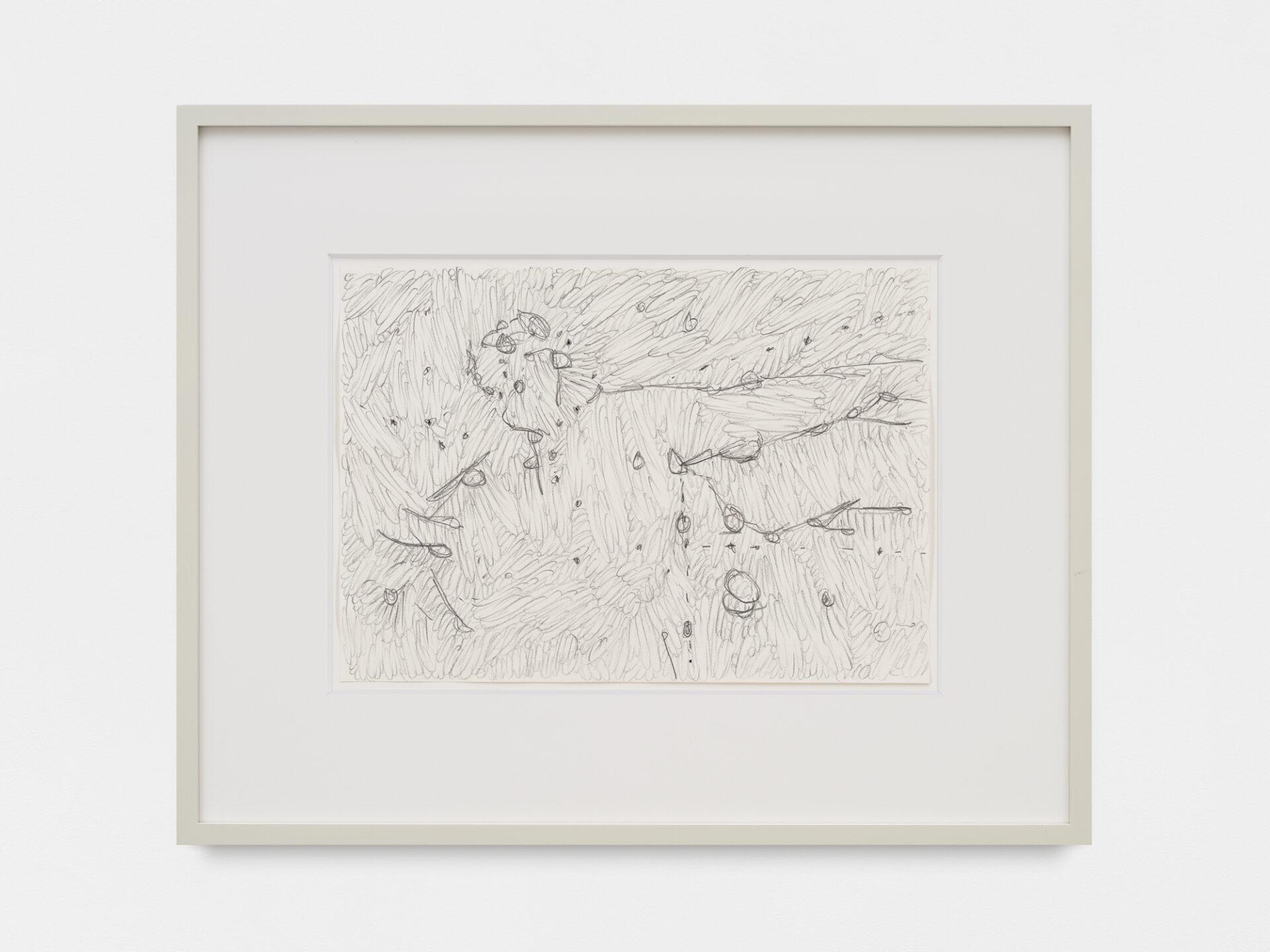
Study for Latent Entities (Simurgh), 2026
pencil on paper
21 x 29.5 cm; framed: 37 x 45.8 x 2.8 cm
Achraf Touloub
Study for Latent Entities (Simurgh), 2026
pencil on paper
21 x 29.5 cm; framed: 37 x 45.8 x 2.8 cm
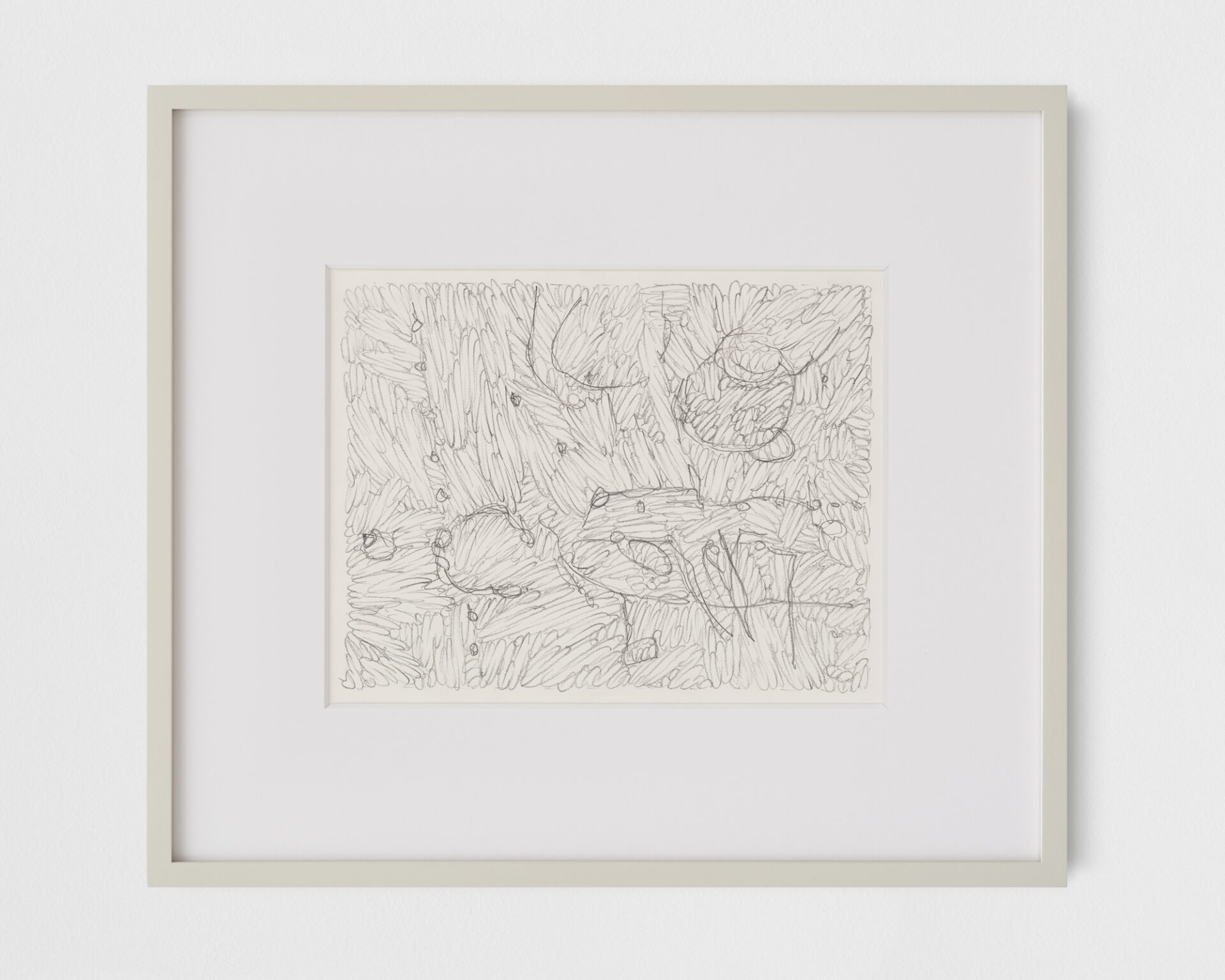
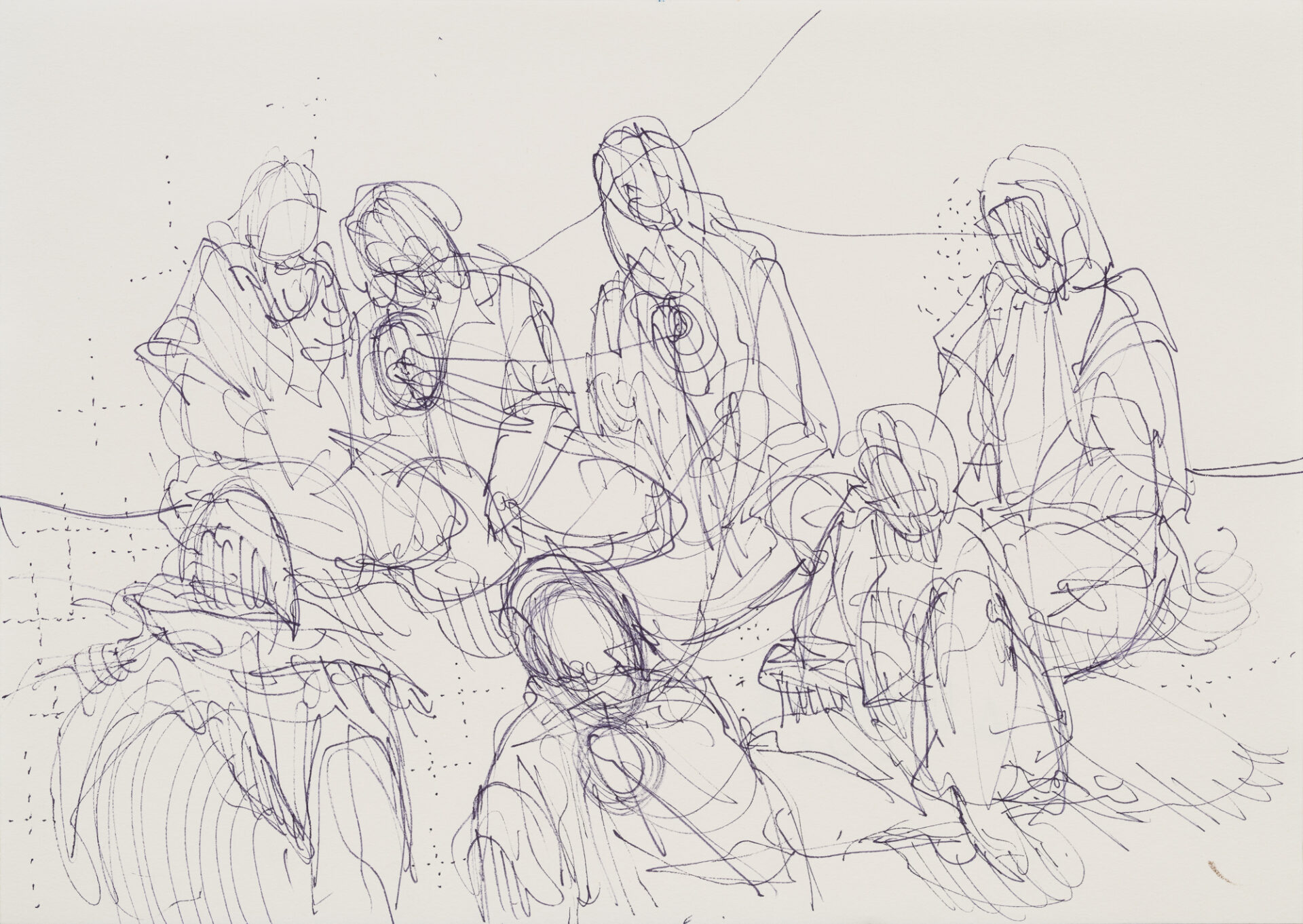
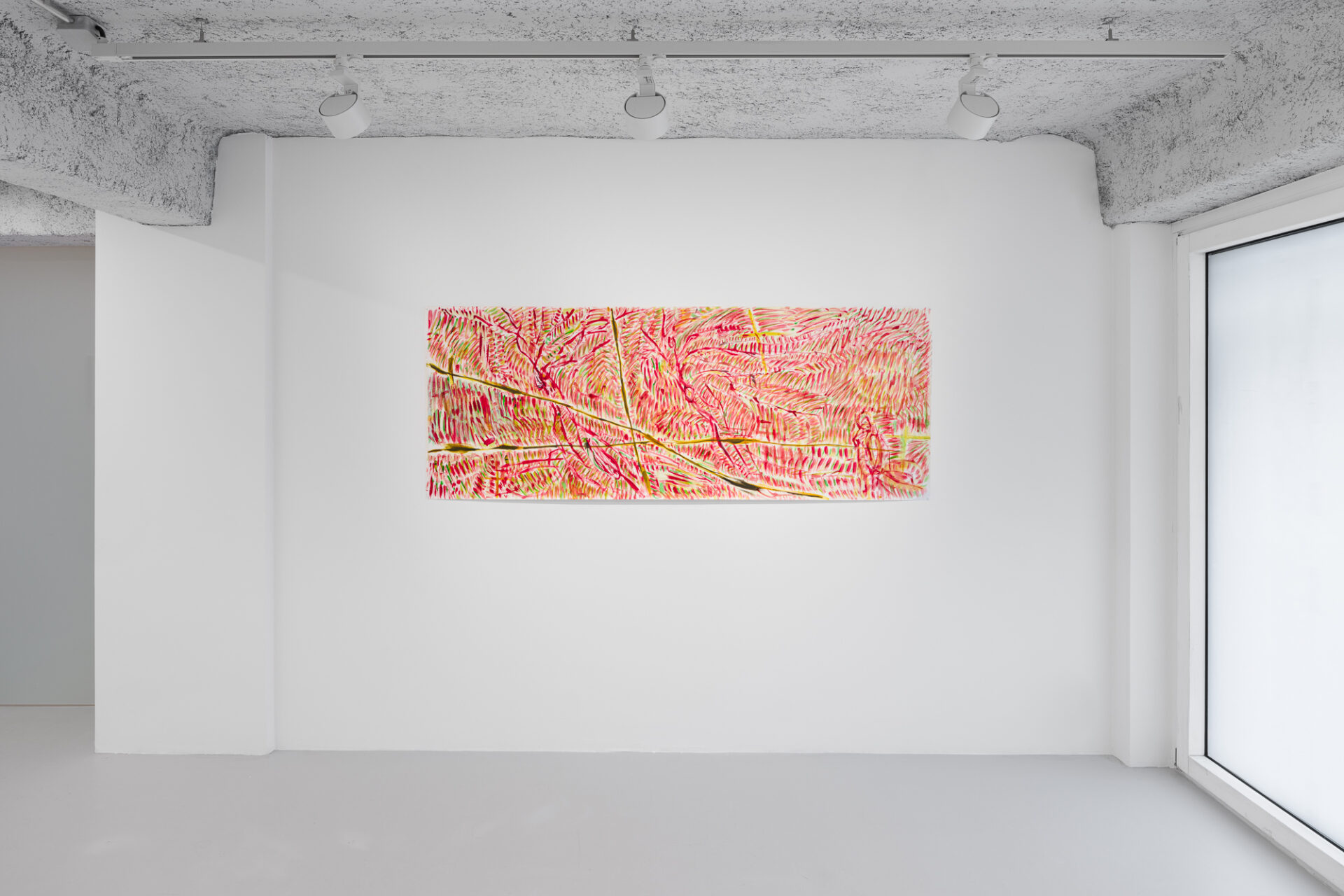
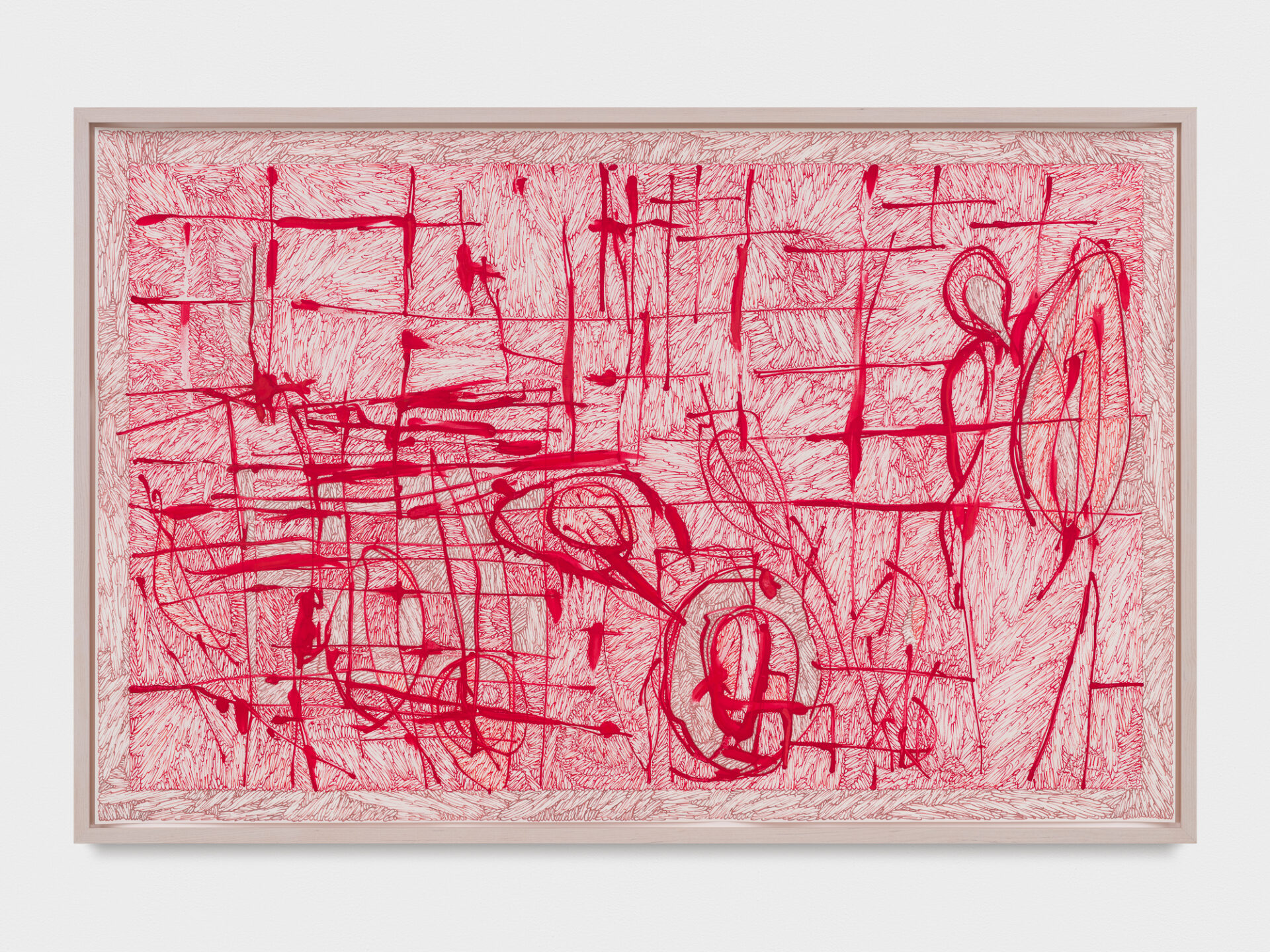
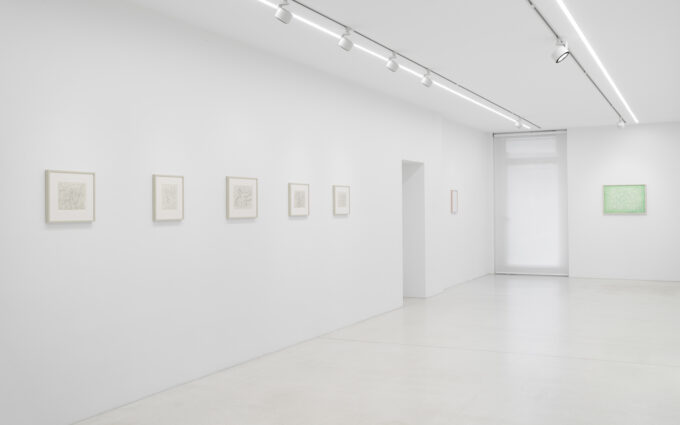
“In the works on paper, the accumulation of lines is also, for me, an allegory of information.”
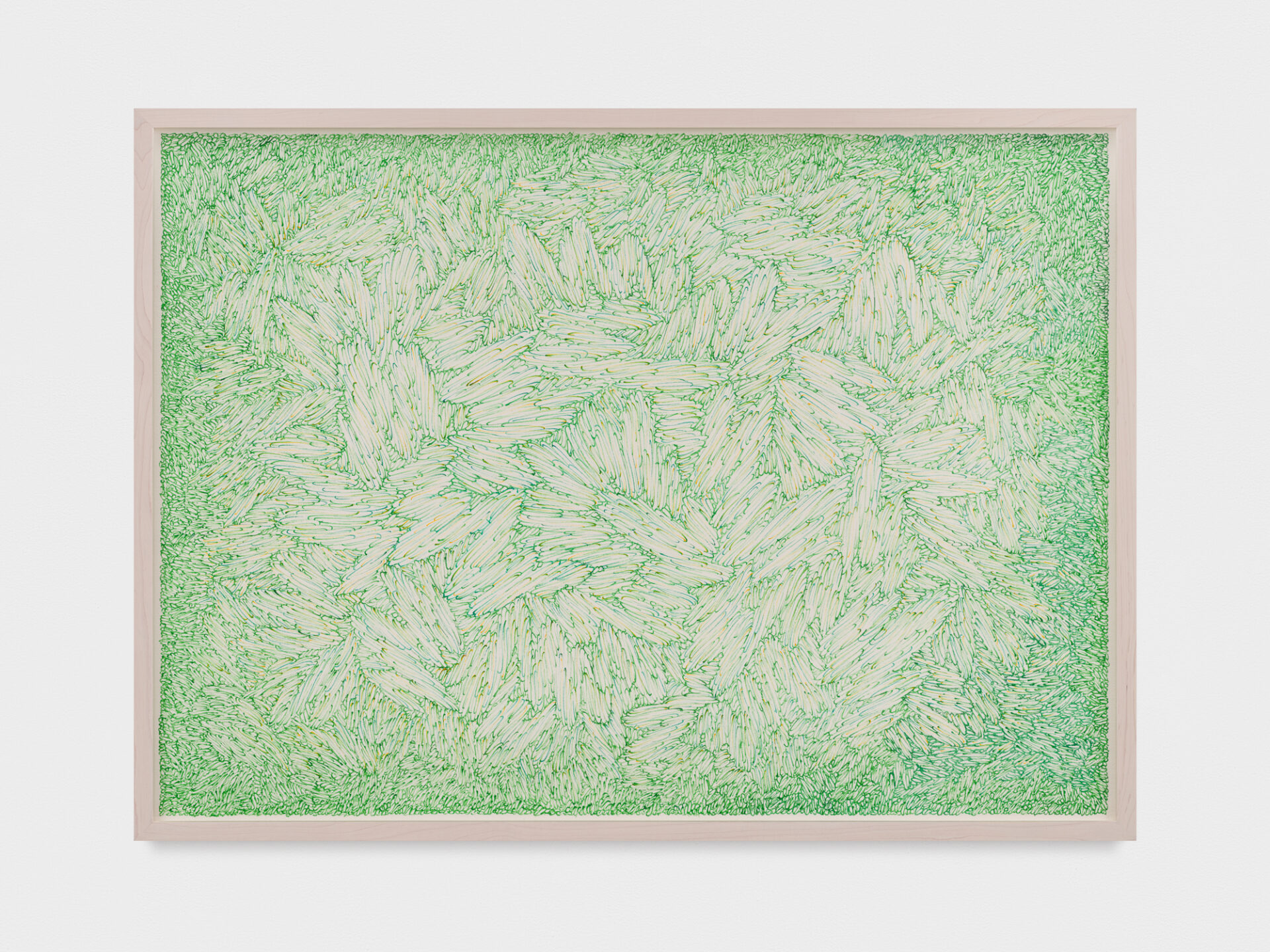
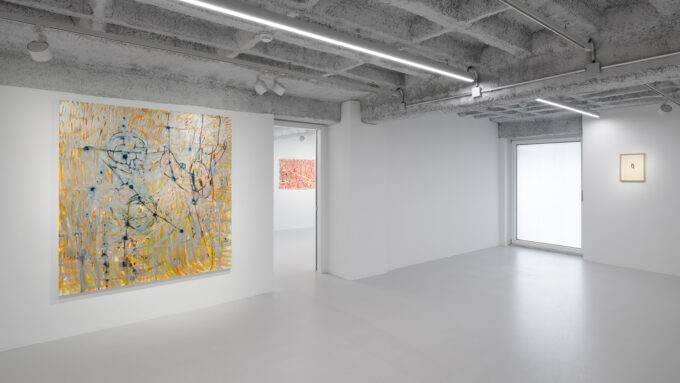
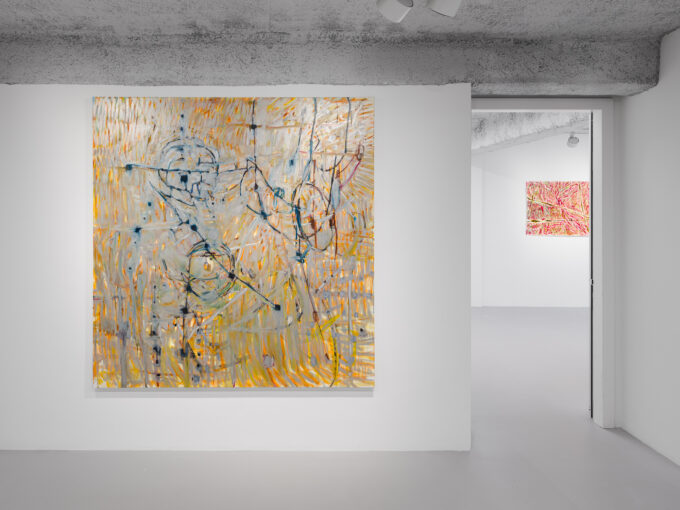
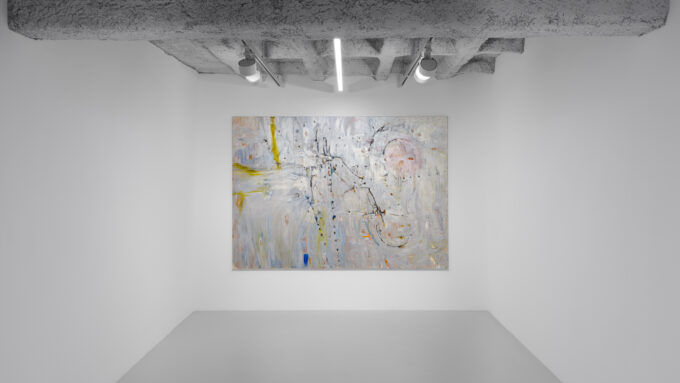
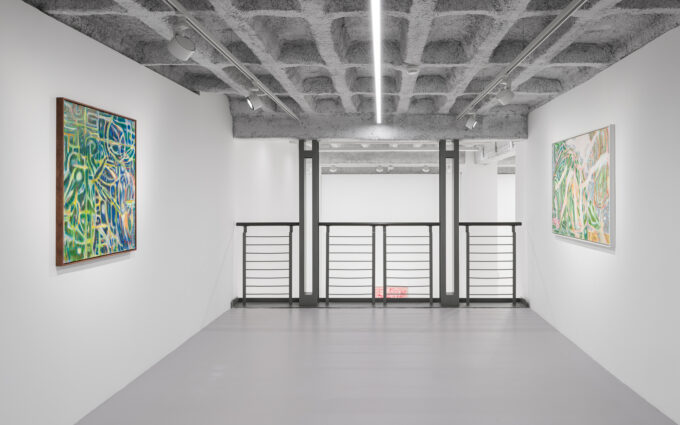
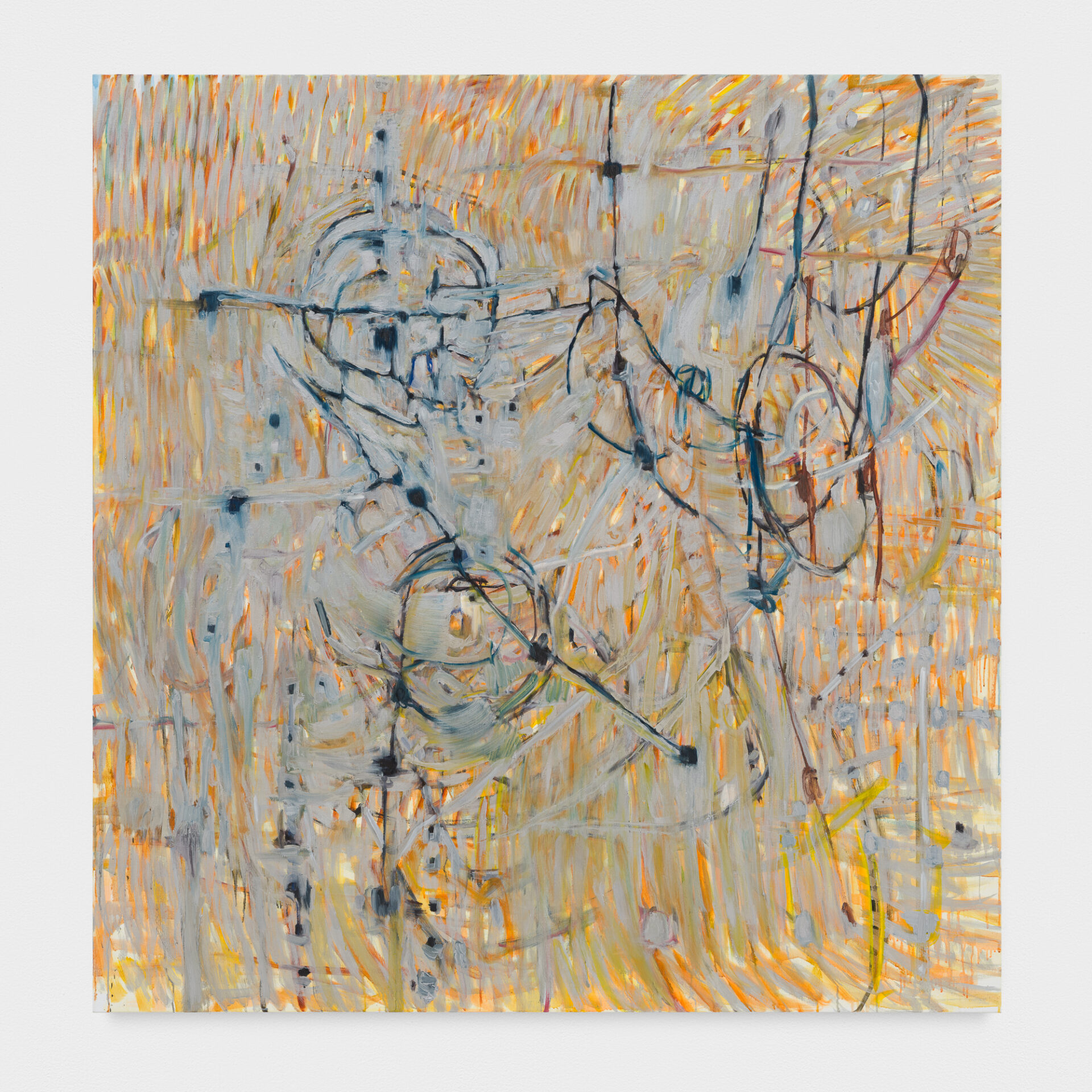
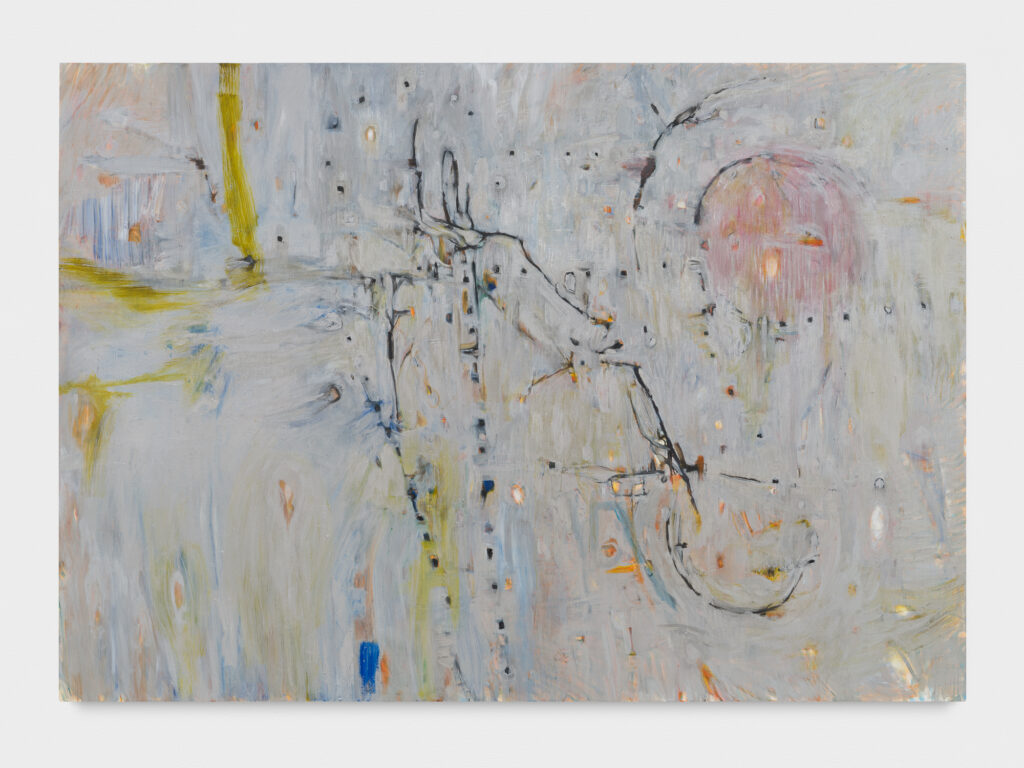
“I made some paintings that are not supposed to be for humans. You will have this silver composition of dots and lines, meant as a representation of systems, a representation of AI. Imagine that I made a painting for an intelligent camera — one that is supposed to recognize you. I am very interested in this idea that, progressively, you move from these abstract figures melting to an idea of representation that is not made only for humans, because we are no longer the only witnesses of this world.”
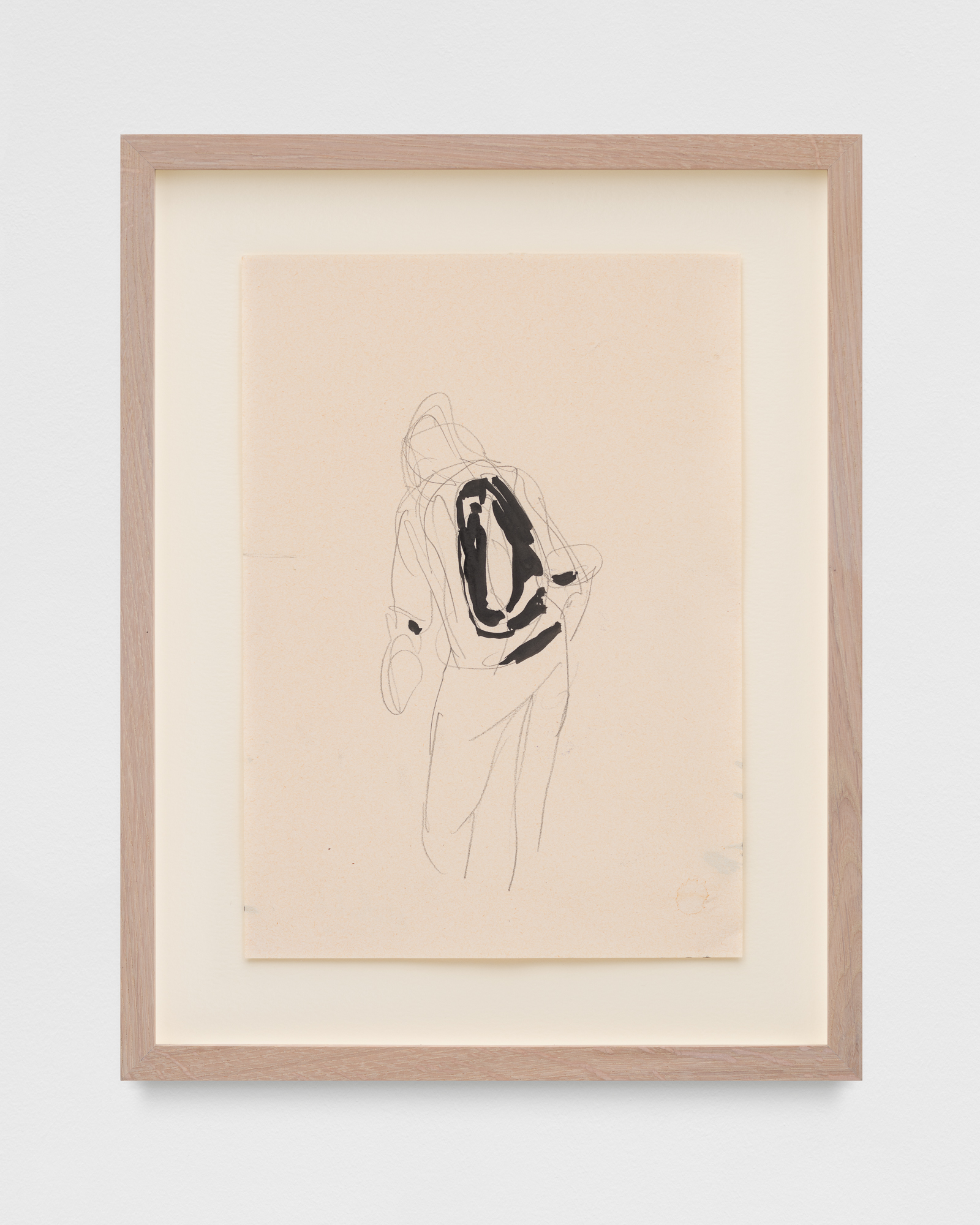
Achraf Touloub
Untitled, 2024
ink and pencil on paper
29.3 x 21 cm; framed: 39.5 x 31 x 2.8 cm
Achraf Touloub
Untitled, 2024
ink and pencil on paper
29.3 x 21 cm; framed: 39.5 x 31 x 2.8 cm
Achraf Touloub
Abu Ismaîl (viral and metaleptic), 2026
oil on canvas
92 x 73 cm; framed: 95 x 76 x 4 cm
Achraf Touloub
Abu Ismaîl (viral and metaleptic), 2026
oil on canvas
92 x 73 cm; framed: 95 x 76 x 4 cm
Achraf Touloub
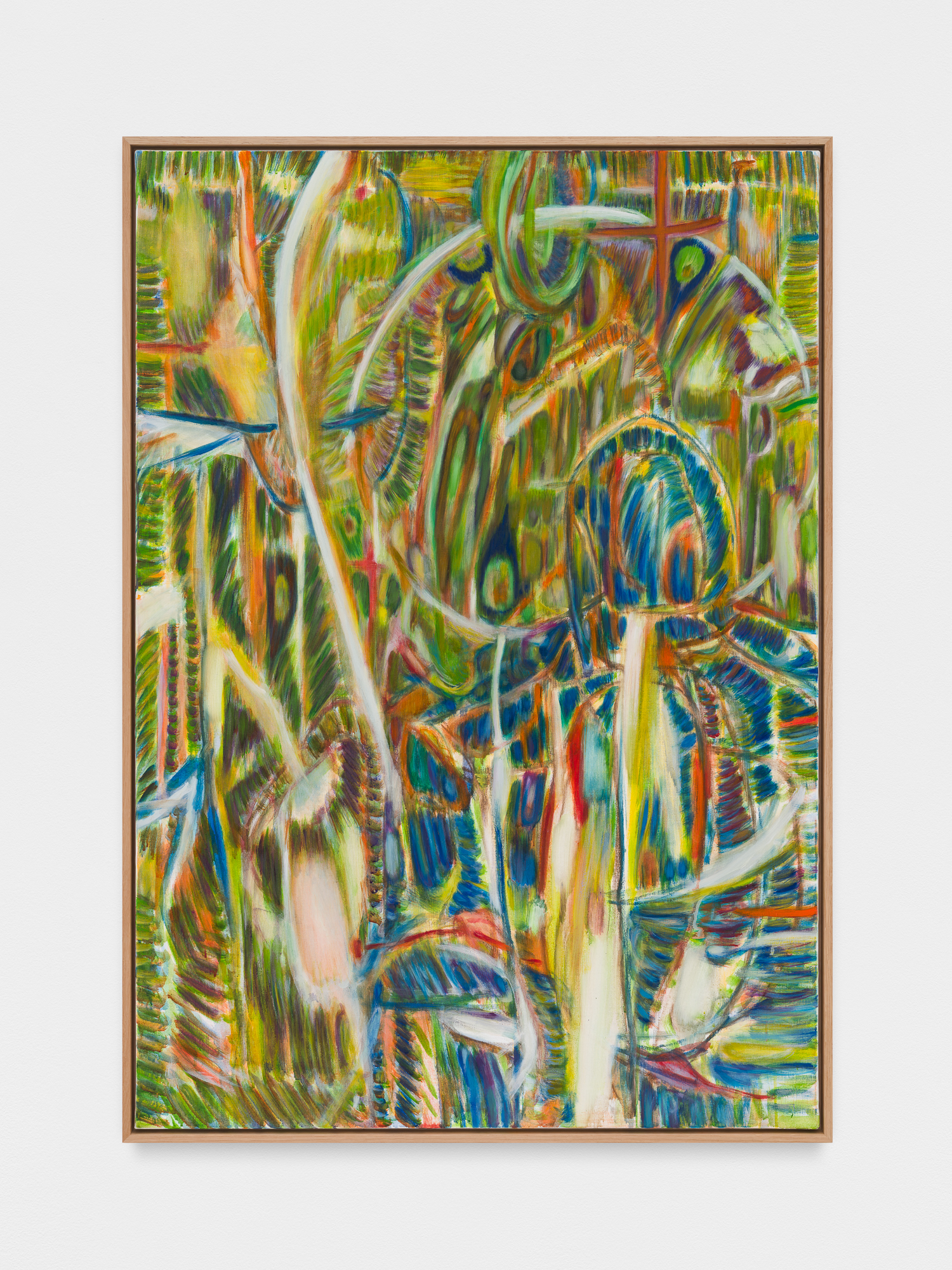
La chambre des oiseaux, 2026
oil on canvas
116 x 81 cm; framed: 119 x 84.5 x 4 cm
Achraf Touloub
La chambre des oiseaux, 2026
oil on canvas
116 x 81 cm; framed: 119 x 84.5 x 4 cm
Achraf Touloub
La chambre des oiseaux, 2026
oil on canvas
116 x 81 cm; framed: 119 x 84.5 x 4 cm
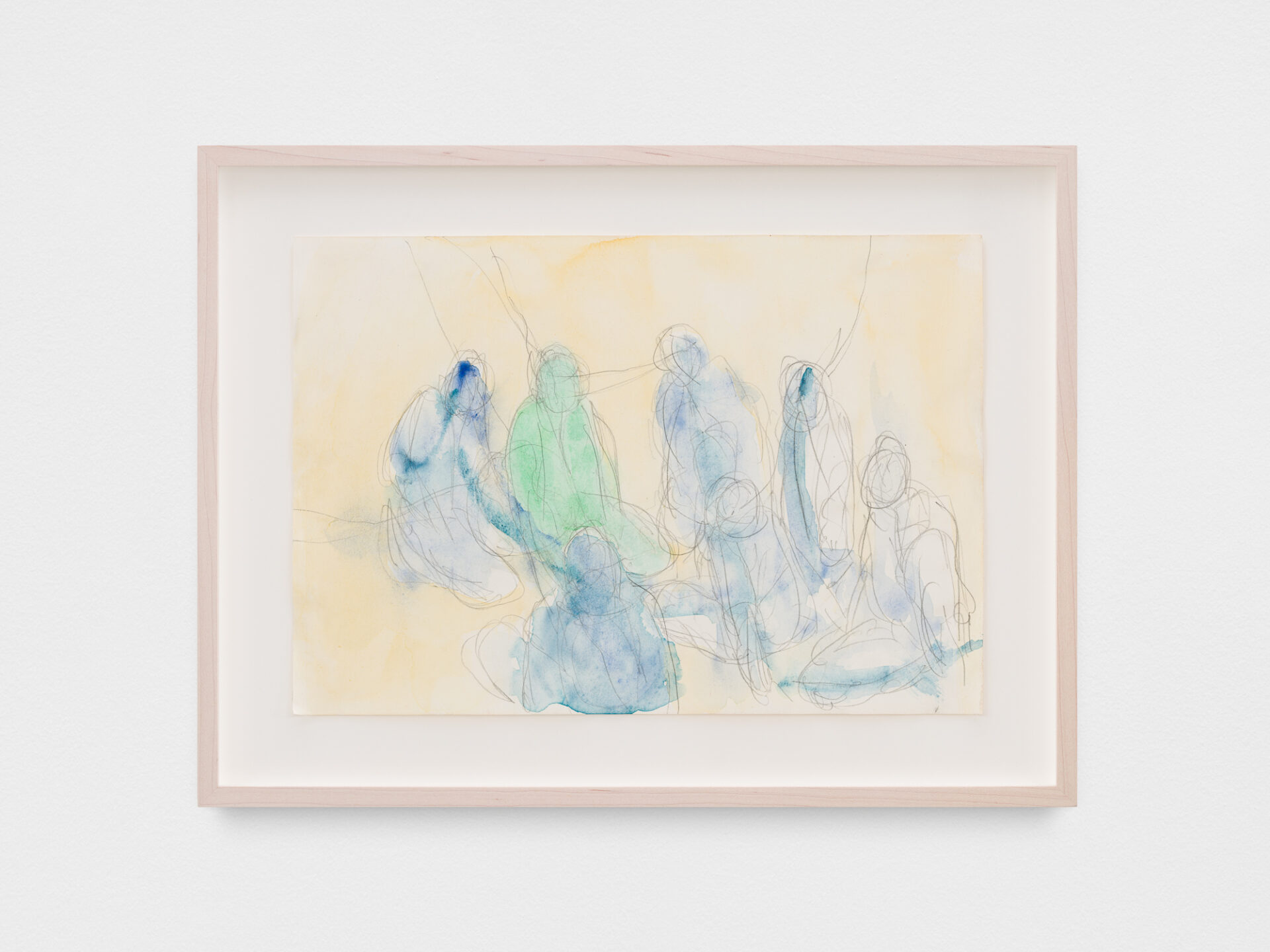
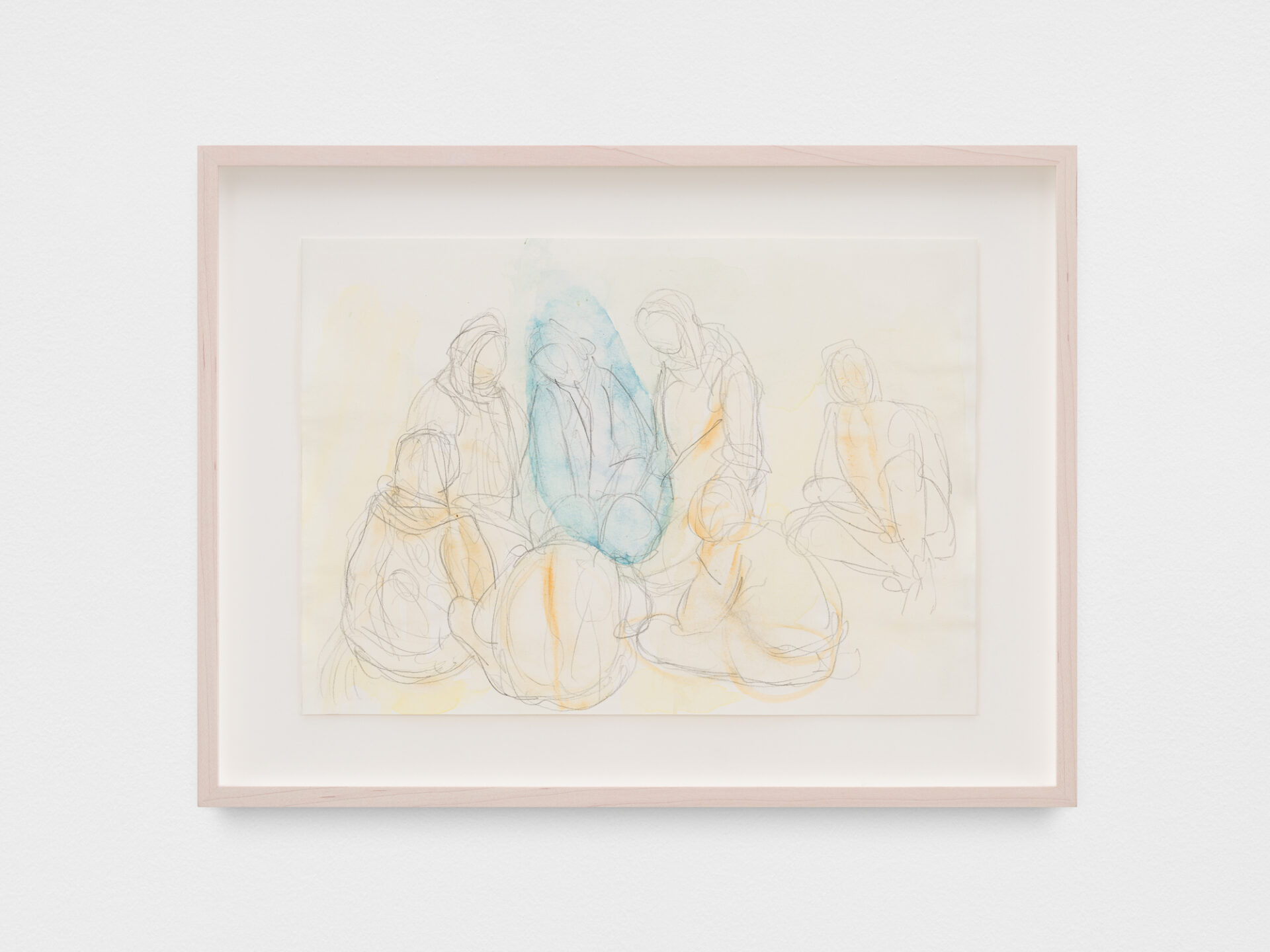
“A painting can give you this immersive power: like when you play a video game and you see from behind. If you are following someone, you see them from the back, and they become a kind of generic figure. But you are also part of the group when you look at them.”
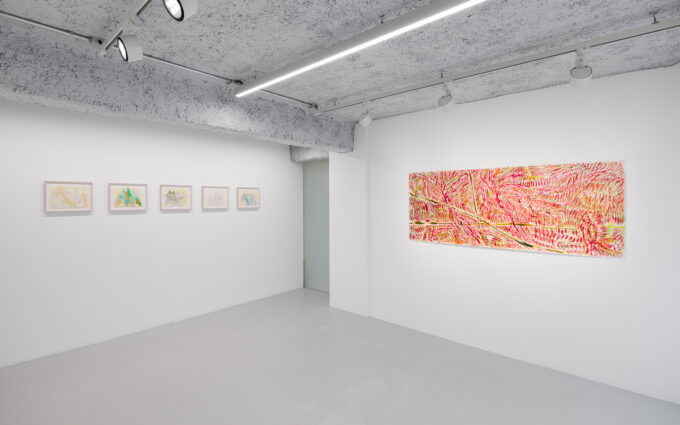
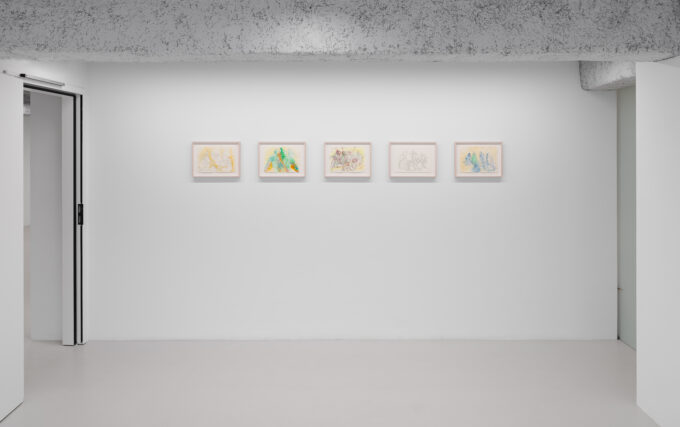
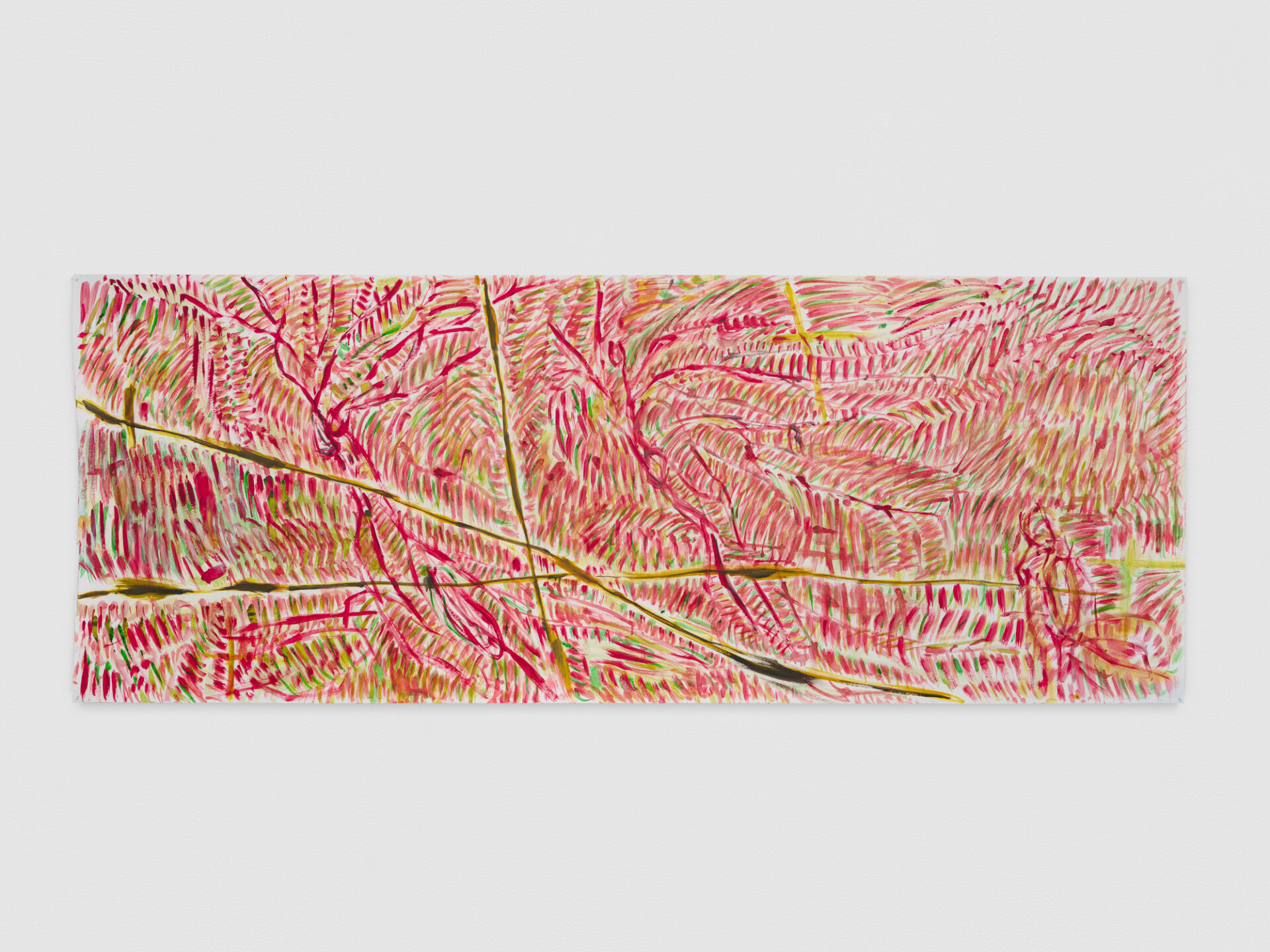
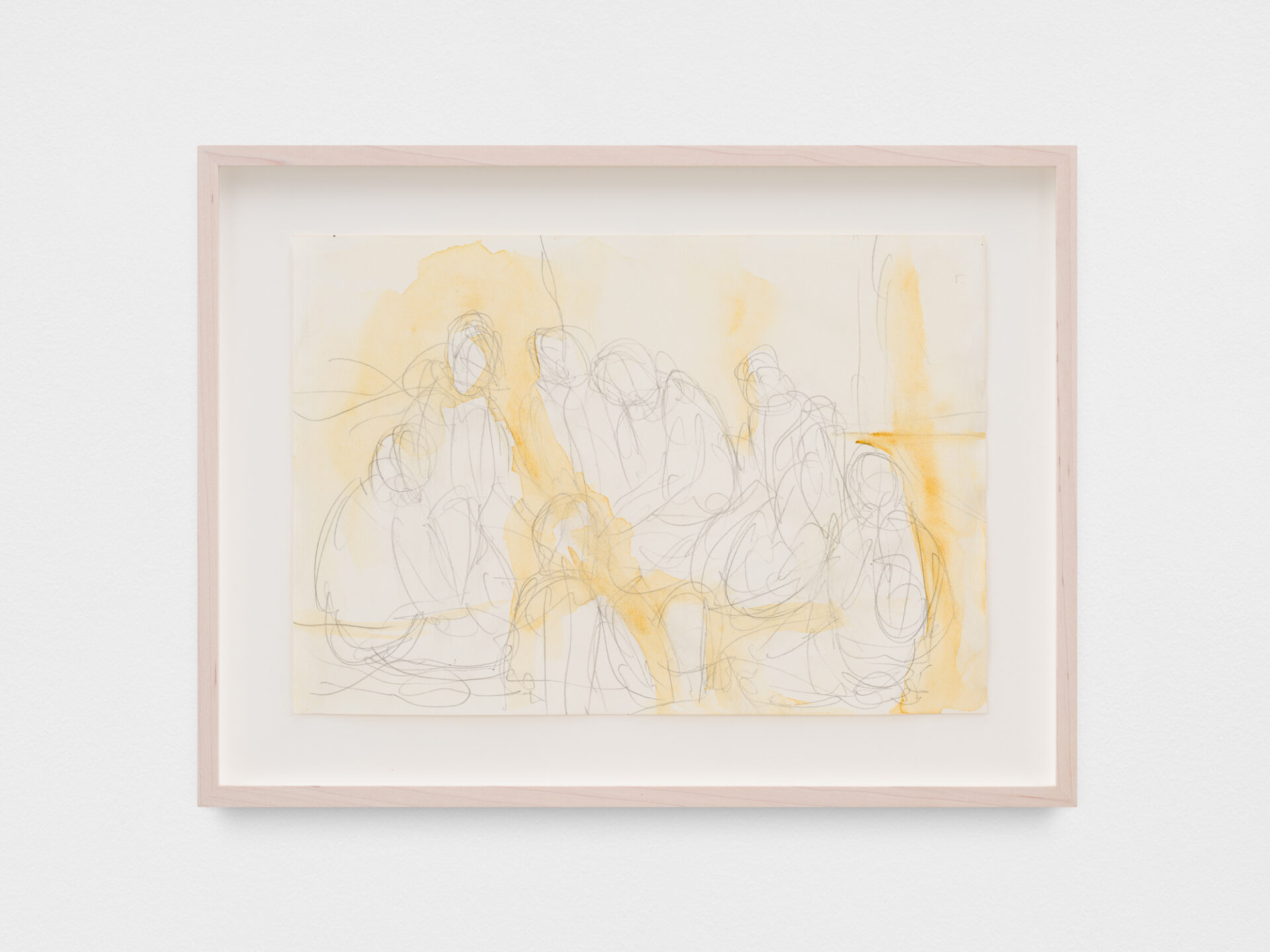
Achraf Touloub
The Gathering, 2026
graphite and watercolour on paper
21 x 30 cm; framed: 28.6 x 38 x 2.8 cm
Achraf Touloub
The Gathering, 2026
graphite and watercolour on paper
21 x 30 cm; framed: 28.6 x 38 x 2.8 cm
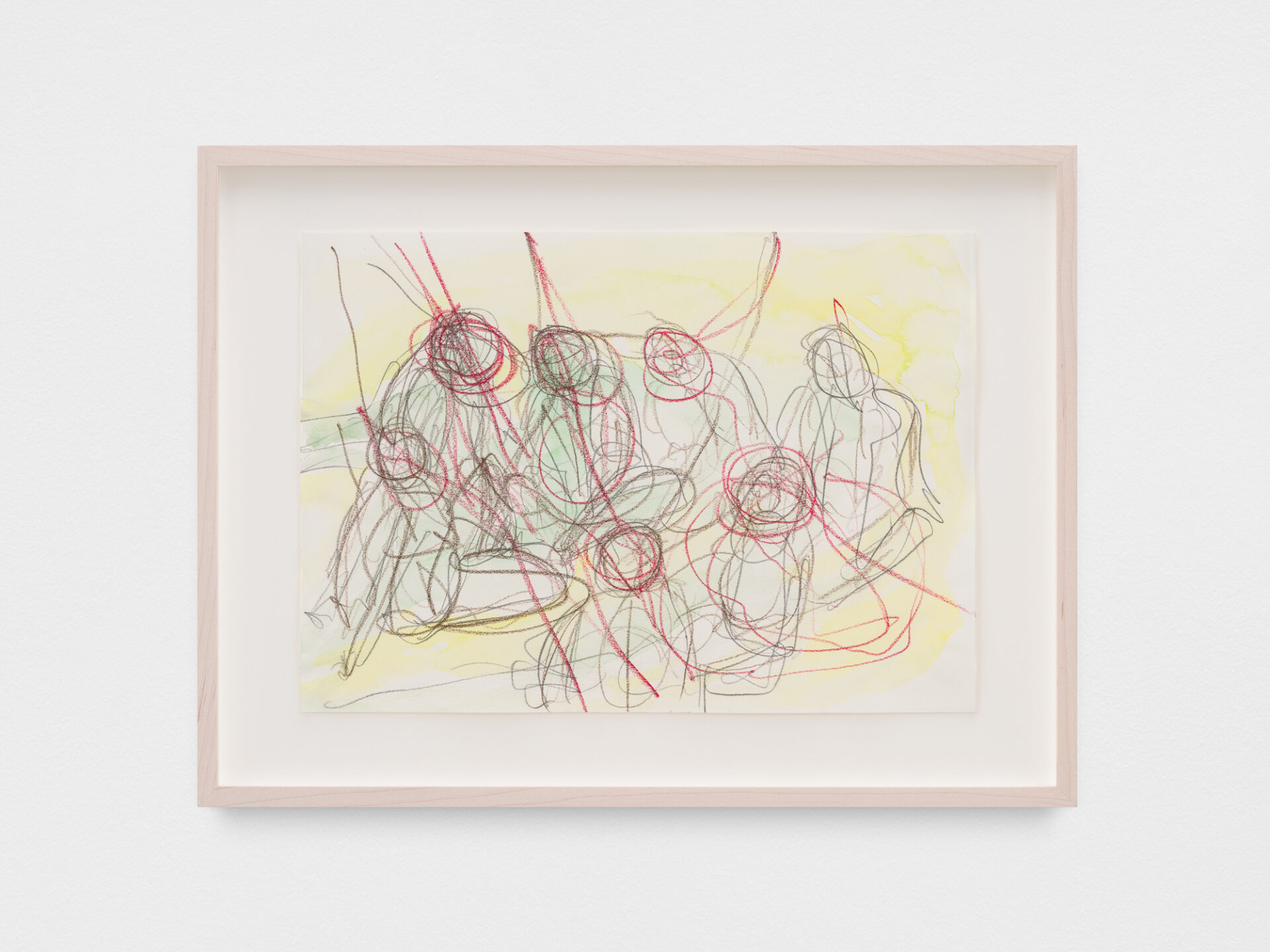
Achraf Touloub
Untitled, 2026
watercolour, coloured pencils and pencil on paper
20.8 x 29.4 cm; framed: 28.6 x 38 x 2.8 cm
Achraf Touloub
Untitled, 2026
watercolour, coloured pencils and pencil on paper
20.8 x 29.4 cm; framed: 28.6 x 38 x 2.8 cm
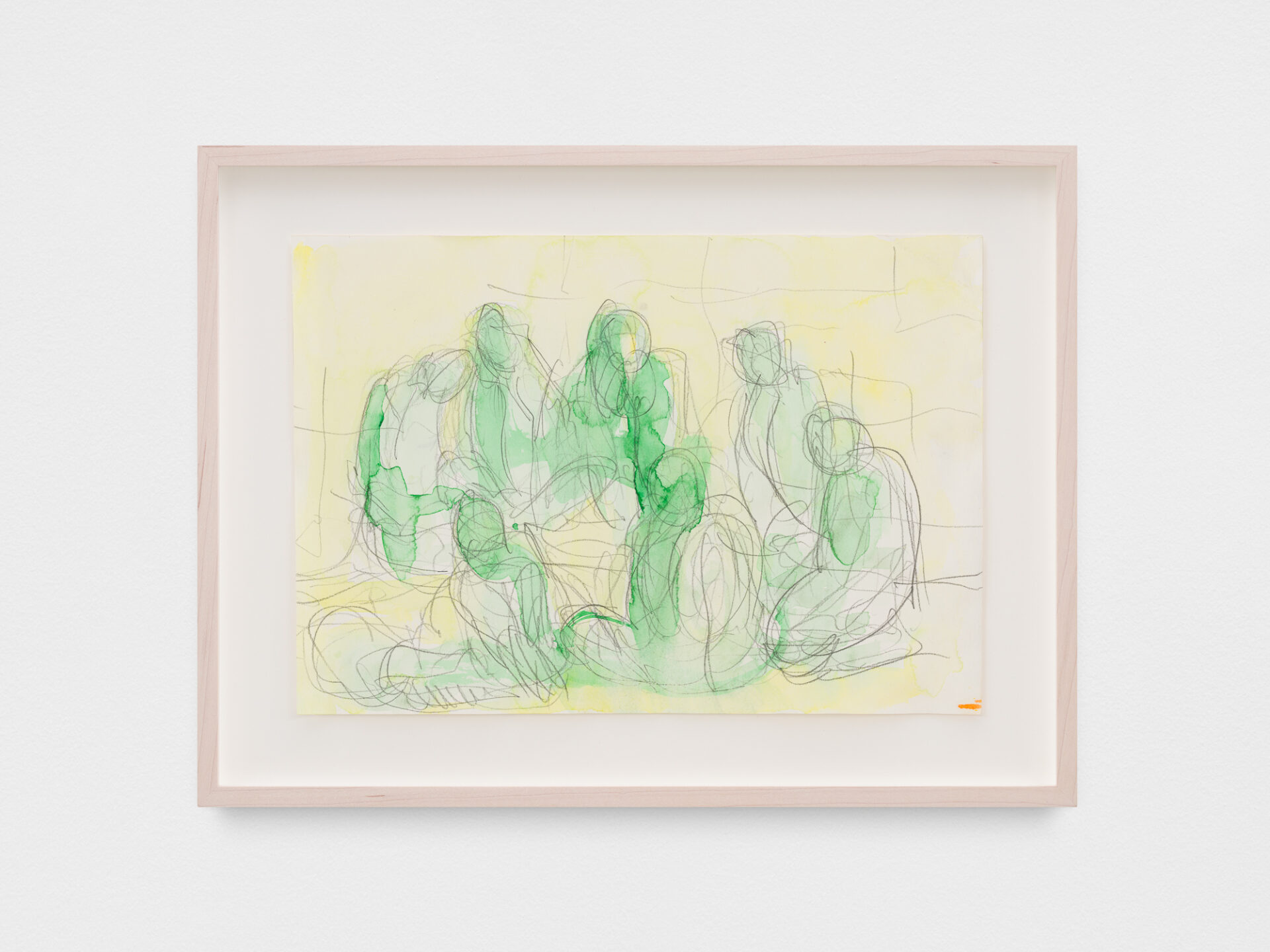
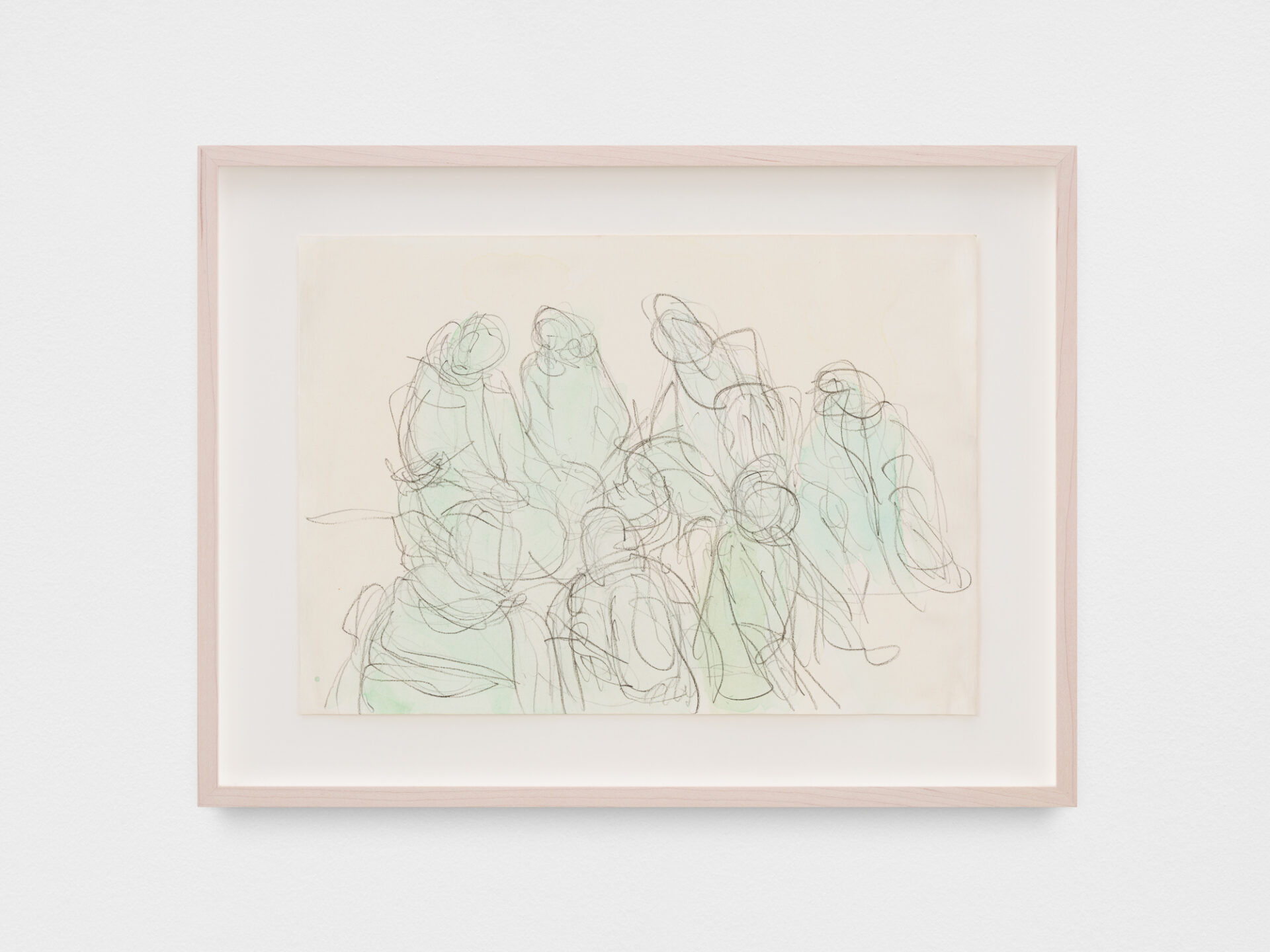
Achraf Touloub
Untitled, 2026
pencil and watercolour on paper
20.5 x 29.4 cm; framed: 28.6 x 38 x 2.8 cm
Achraf Touloub
Untitled, 2026
pencil and watercolour on paper
20.5 x 29.4 cm; framed: 28.6 x 38 x 2.8 cm
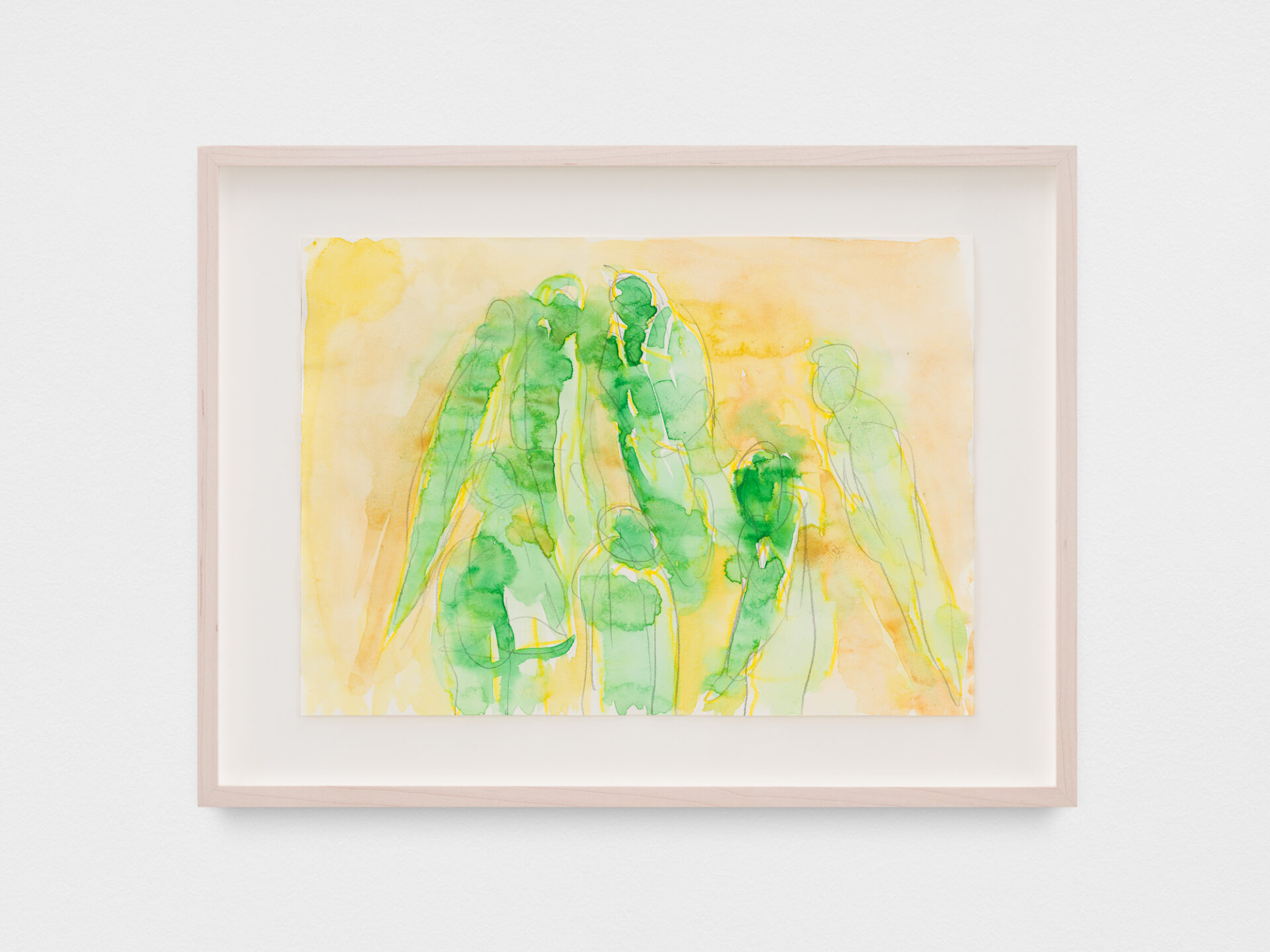
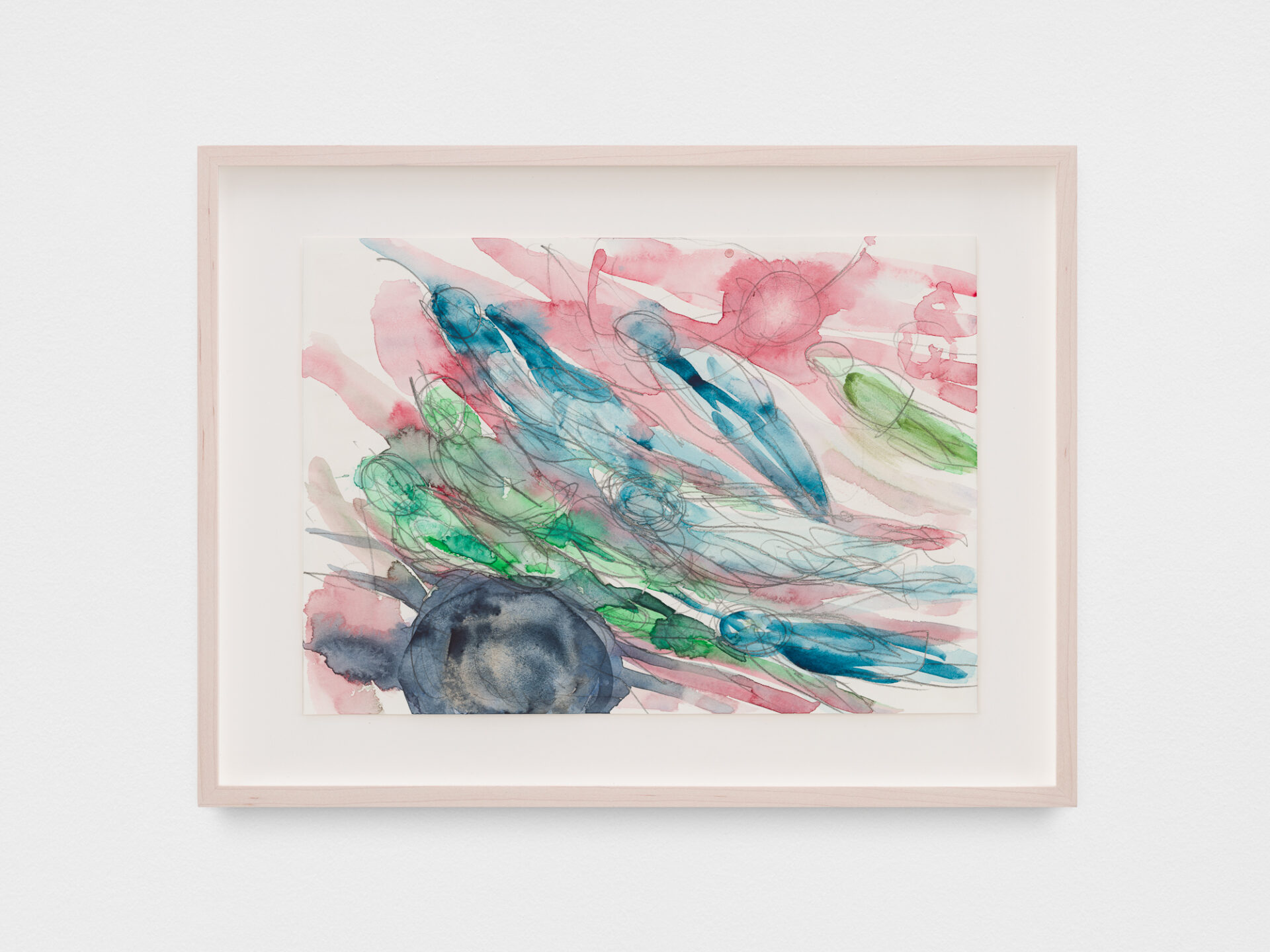
Achraf Touloub
Untitled, 2026
pencil and watercolour on paper
20.5 x 29.5 cm; framed: 28.6 x 38 x 2.8 cm
Achraf Touloub
Untitled, 2026
pencil and watercolour on paper
20.5 x 29.5 cm; framed: 28.6 x 38 x 2.8 cm